Southern Thailand rewards travellers who stop trying to “cover” it. The region looks compact on a map, but distances are deceptive, weather shifts quickly between coasts, and the most memorable moments rarely happen while rushing between islands. The Andaman side of Thailand works best when approached slowly: limestone cliffs appearing through morning haze, long-tail boats cutting across flat green water, afternoon storms rolling over jungle-covered mountains, quiet Muslim fishing villages smelling of grilled squid and charcoal smoke.
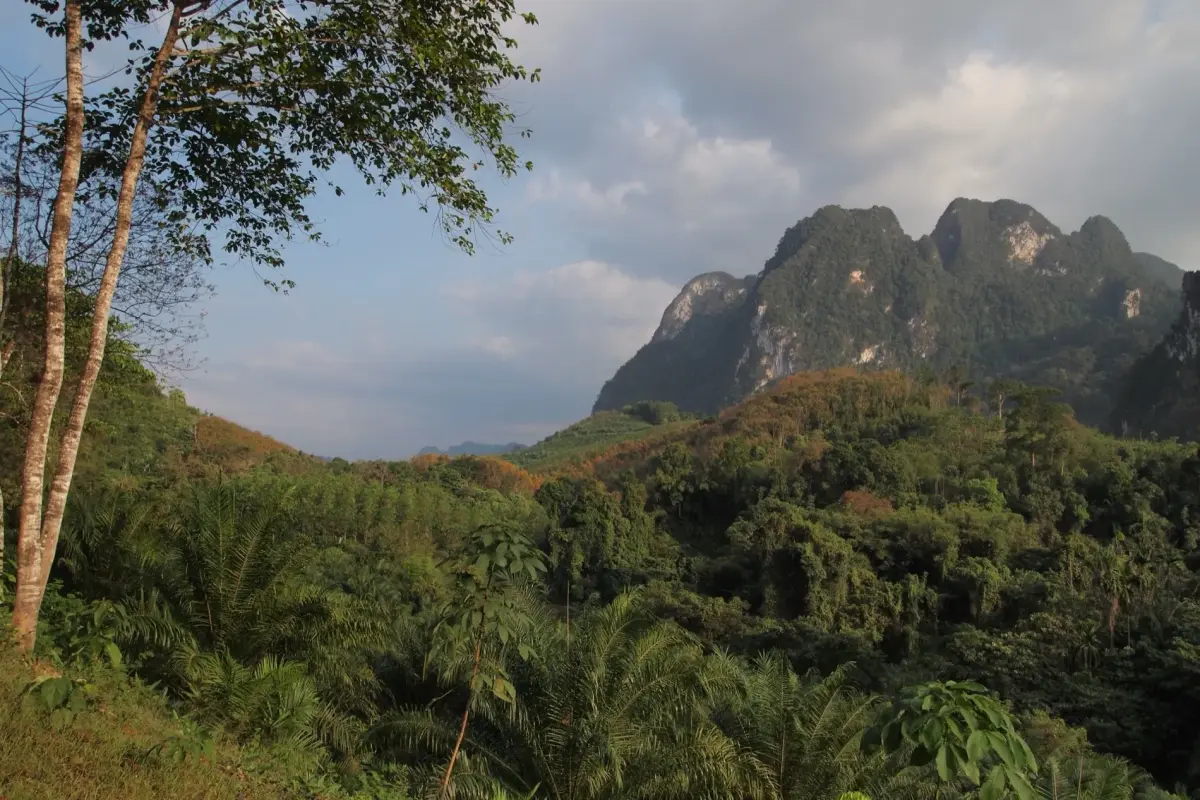
This route focuses on two places that complement each other unusually well: Khao Sok National Park and the coast of Krabi. One is dense rainforest wrapped around an enormous reservoir filled with drowned limestone peaks. The other is a coastline where cliffs rise directly from the sea, separating beaches, peninsulas, caves, mangroves, and small island communities.
The combination creates a rare kind of Thailand trip: visually dramatic without requiring constant movement, luxurious without depending on five-star resorts, and active without becoming exhausting. It suits travellers who want long swims, boat journeys, quiet mornings, excellent seafood, massage, jungle air, and enough comfort to genuinely rest.
This is not an itinerary built around nightlife, crowded party islands, or aggressive sightseeing schedules. Two weeks here should feel spacious.
01Why Combine Khao Sok and Krabi
Most travellers treat Khao Sok as a short stop between Phuket and the Gulf islands. That approach misses the point entirely. The national park changes the rhythm of the trip. After beaches and airports, the rainforest slows the nervous system almost immediately. Humidity softens sound. Evenings become darker and quieter. Mornings begin with mist sitting low over limestone cliffs while hornbills cross the sky above the trees.
Then, after several days inland, the Krabi coast feels sharper and brighter by comparison. The sea becomes more vivid. Food becomes saltier and lighter. Days reorganise themselves around tides, swimming, kayaking, and boat rides rather than jungle trails.
The contrast is what makes the route work.
Two weeks also gives enough time to avoid the common mistake of constantly changing hotels. Southern Thailand becomes significantly more enjoyable when transfers are reduced. Boats get delayed. Rain appears suddenly. Roads flood occasionally during monsoon periods. Leaving space inside the itinerary prevents the trip from turning into logistics management.
02Days 1–4: Entering the Rainforest in Khao Sok
Most travellers reach Khao Sok from either Phuket, Krabi, or Surat Thani. The drive itself becomes part of the transition. Palm plantations gradually give way to steeper terrain until limestone cliffs begin rising unexpectedly behind roadside villages.
The main settlement near the park entrance is small and linear, built along a single road with cafés, local restaurants, simple guesthouses, jungle resorts, and tour offices. It is not a polished resort town. That is part of its appeal. Nights are dark. Cicadas are loud. Monkeys occasionally appear near rooftops and power lines.
Staying Near the National Park Entrance
For the first nights, staying near the park entrance works best rather than immediately going to the lake. The area allows time to recover from flights while still accessing jungle walks, river activities, and quieter resorts surrounded by forest.
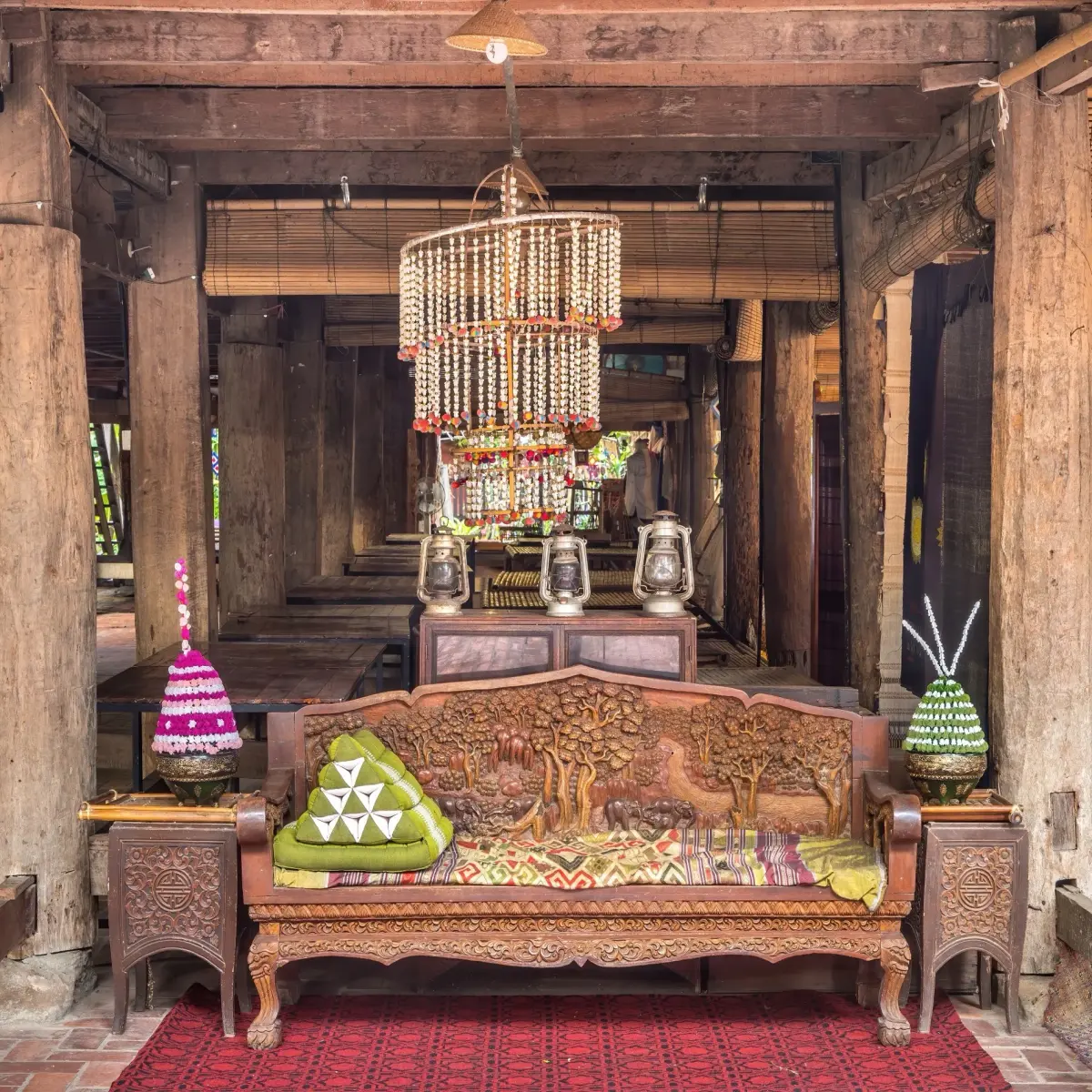
Accommodation here ranges from very simple bamboo huts to unusually refined eco-lodges built into the jungle landscape. The best places are not necessarily the most expensive ones, but those integrated carefully into the environment with open-air bathrooms, wooden terraces, and enough distance from the main road to hear the forest at night.
Khao Sok’s atmosphere changes dramatically depending on weather. During dry mornings, cliffs appear sharply defined against blue sky. During rainy periods, mist drifts between trees and the jungle becomes almost monochrome green. Heavy rain is not necessarily a problem here. In many ways it improves the landscape.
Jungle Walks and Wildlife
Khao Sok contains one of the oldest evergreen rainforests in the world. The forest structure feels different from younger tropical forests elsewhere in Southeast Asia. Trees rise extremely high above the canopy, vines cross trails in thick ropes, and the density of vegetation absorbs sound surprisingly effectively.
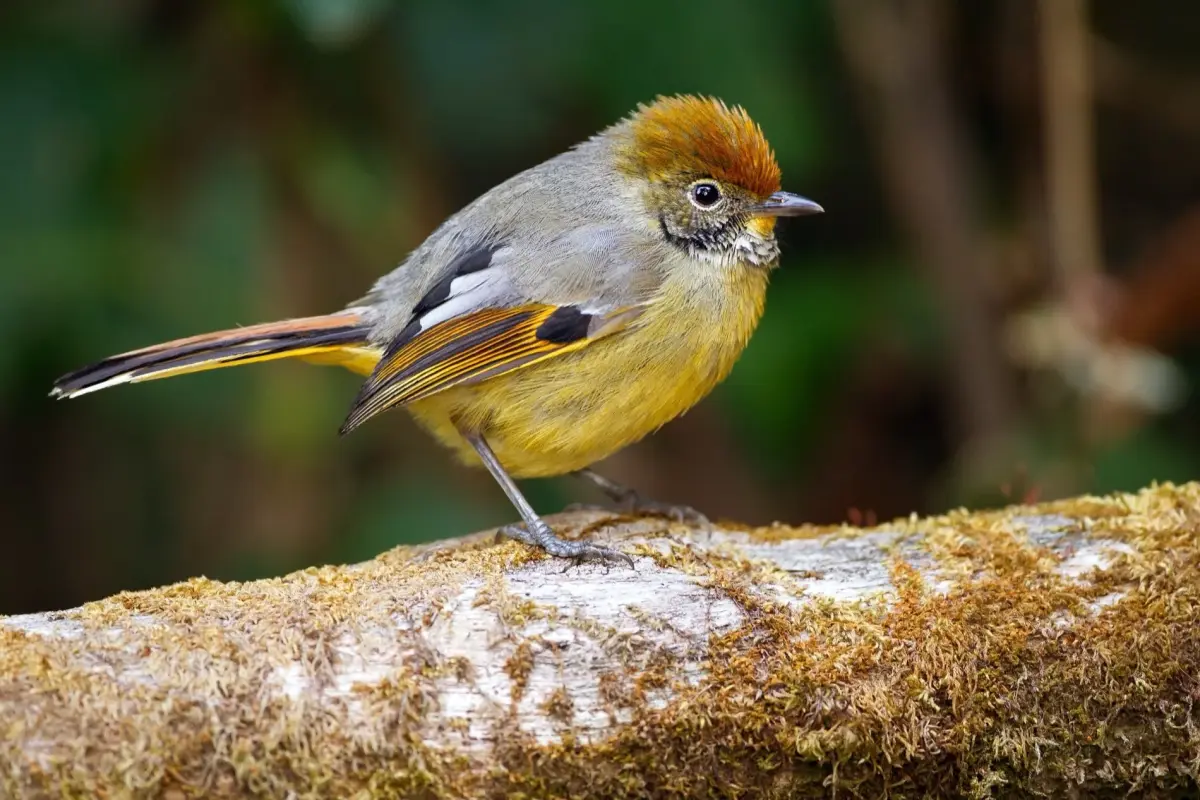
Wildlife sightings vary enormously depending on luck, season, and patience. Gibbons are heard more often than seen. Hornbills are common enough that attentive travellers usually spot them eventually, especially near fruiting trees. Macaques appear frequently around roads and trails. More elusive animals like tapirs, civets, or wild elephants exist in the park but should never be expected casually.
Good guides matter here. Experienced local guides identify movement and sounds invisible to most visitors. They also explain plants, insects, and ecological relationships that transform a walk from simple sightseeing into understanding the forest itself.
Leech socks during rainy season are genuinely useful rather than theatrical travel accessories.
The Food Around Khao Sok
Food in Khao Sok reflects southern Thai cooking more than tourist-oriented central Thai cuisine. Curries become hotter, turmeric appears frequently, and seafood from the coast mixes with freshwater fish and jungle ingredients.
Gaeng som, a sour southern curry often made with fish, tamarind, and turmeric, tastes entirely different from the sweeter curries many visitors associate with Thailand. Stir-fried stink beans with shrimp appear often in local restaurants, bringing a strong earthy bitterness unfamiliar to many travellers but deeply characteristic of the south.
Grilled river fish is common near the park. Typically the fish is packed with lemongrass and herbs, heavily salted, then grilled slowly over charcoal until the skin becomes crisp and smoky.
Rice remains central to every meal. Southern Thai curries are intense partly because they are designed to be eaten with large amounts of rice rather than alone.
03Days 5–6: Cheow Lan Lake
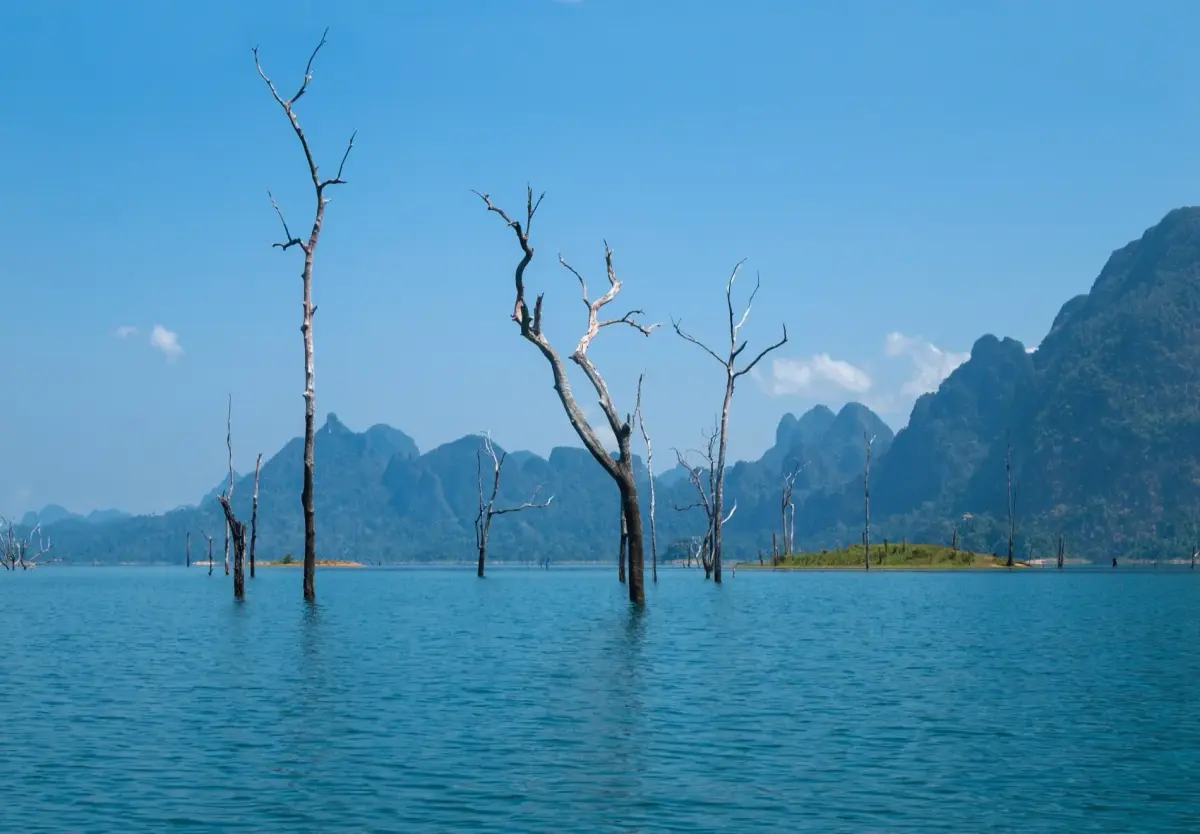
The emotional centre of Khao Sok is Cheow Lan Lake, an enormous artificial reservoir created in the 1980s after construction of the Ratchaprapha Dam. The flooding submerged valleys and forests, leaving limestone peaks emerging from green water like islands.
Photographs rarely communicate the scale properly. The lake stretches far beyond the famous viewpoints seen online. Some sections feel almost fjord-like, with cliffs dropping steeply into opaque green water.
Reaching floating raft houses requires a long-tail boat journey across the reservoir. Early morning departures are best because the lake is calmer and mist often still hangs between the cliffs.
Floating Raft Houses
Staying overnight on the lake changes the experience completely. Day-trippers leave in late afternoon, and silence gradually settles across the water.
Accommodation quality varies enormously. Some raft houses are extremely basic with cold water showers and thin walls. Others now offer comfortable private rooms with proper beds, electricity during limited hours, and surprisingly good food. Expectations should still remain realistic. This is lake accommodation in a national park, not an urban hotel disguised as “eco luxury.”
The appeal comes from location rather than amenities.
At dawn, water becomes mirror-still before boat engines begin again. Jungle sounds carry across the surface. Occasionally mist obscures entire cliff faces for hours before sunlight burns through.
Swimming directly from the raft platforms becomes part of the daily rhythm. The water is warm almost year-round.
Boat Exploration and Cave Systems
Lake excursions usually involve narrow channels leading deeper between limestone formations. Some routes include caves requiring short hikes through humid forest sections before entering large cavern systems filled with stalactites and bats.
Conditions inside caves change seasonally. During heavy rain periods, water levels can rise quickly, making some caves inaccessible or unsafe. Responsible guides adapt accordingly rather than forcing risky visits for photographs.
The most memorable sections of the lake are often not the famous viewpoints but the quieter corners where jungle reaches directly to the waterline and boat engines are cut completely.
This route focuses on two places that complement each other unusually well: Khao Sok National Park and the coast of Krabi. One is dense rainforest wrapped around an enormous reservoir filled with drowned limestone peaks. The other is a coastline where cliffs rise directly from the sea, separating beaches, peninsulas, caves, mangroves, and small island communities.
04Days 7–10: Ao Nang and the Krabi Coast
After Khao Sok, the move toward the Andaman coast feels almost cinematic. The landscape opens gradually until limestone towers begin appearing beside the sea instead of jungle rivers.
Most travellers stay in Ao Nang because it functions as the transport hub for the coast while still offering beach access, boat connections, restaurants, massage shops, and relatively easy logistics.
Ao Nang itself is not the most beautiful beach in Thailand. Understanding this immediately helps avoid disappointment. The town works because of access. From here, long-tail boats reach Railay, nearby islands, climbing areas, hidden beaches, and mangrove systems quickly and cheaply.
Staying slightly outside the busiest central strip improves the experience considerably. Hillside resorts or quieter southern sections near the beach usually feel calmer while remaining walkable.
Railay Peninsula
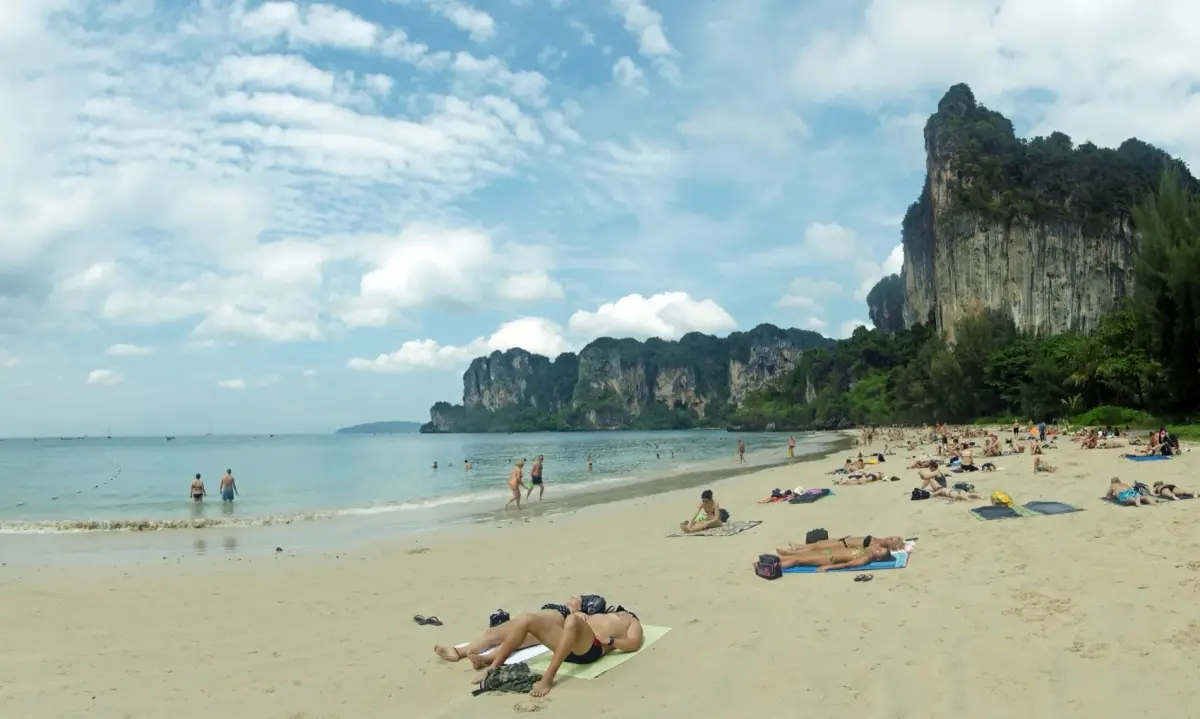
Railay Beach is technically not an island, but limestone cliffs cut it off from mainland roads completely. Access is only by boat.
Railay works best early in the morning or after many day visitors leave. Midday crowds can become intense during high season, particularly around West Railay and Phra Nang Beach.
The peninsula’s geography explains its atmosphere. Massive limestone walls rise directly behind the beaches, creating enclosed pockets of sand separated from each other by cliffs and jungle paths. Rock climbers hang from routes overhead while long-tail boats line the shore below.
Phra Nang Cave Beach remains one of the most visually striking beaches in Thailand despite its popularity. The combination of pale sand, shallow turquoise water, and sheer limestone walls still feels dramatic in person.
Swimming conditions vary heavily with tides and season. During calmer months, the water becomes exceptionally clear. During monsoon periods, the sea often turns rougher and less transparent, though the cliffs become even more atmospheric under dark skies.
Sea Kayaking and Mangroves
One of the quieter pleasures around Krabi is kayaking through mangrove systems and limestone canyons away from the main beaches. Areas around Ao Thalane are particularly good for this.
Mangrove ecosystems initially appear visually simple compared to beaches, but guides who understand the environment transform the experience entirely. Mudskippers move between roots. Small crabs climb exposed branches. Monitor lizards occasionally slide into the water from the banks.
Tides reshape the landscape continuously. Narrow passages accessible at high tide can become mud flats hours later.
Kayaking here feels slow in the best possible way. There is little pressure to “achieve” anything beyond moving quietly through the landscape.
05Days 11–13: Quiet Islands Without the Party Atmosphere
Many travellers automatically include Ko Phi Phi, but the islands closer to Krabi’s mainland coast often suit slower travel better.
Ko Yao Noi works especially well for the final section of the trip. The island remains comparatively calm because development restrictions and local Muslim communities have limited the kind of nightlife-driven tourism common elsewhere.
Roads pass rice fields, rubber plantations, fishing villages, and quiet coastline rather than continuous resort construction.
This is not an island for constant activity. Days revolve around small movements: coffee overlooking the bay, slow scooter rides through villages, swimming during high tide, seafood lunches near wooden piers, afternoon rainstorms passing over distant limestone formations.
Seafood on the Andaman Coast
The Andaman coast’s seafood culture differs noticeably from Bangkok and central Thailand. Ingredients are fresher simply because fishing communities remain integrated directly into daily life.
Grilled squid appears everywhere, usually cooked rapidly over charcoal and served with intensely sharp seafood dipping sauce made from lime, garlic, fish sauce, and chilli.
Whole fish is often steamed with lime and garlic or deep-fried until crisp enough to eat almost entirely.
Southern Thai crab curry deserves particular attention. Unlike milder tourist versions elsewhere, local preparations often use strong turmeric, fresh crab meat, coconut milk in restrained amounts, and substantial chilli heat. The flavour becomes earthy rather than sweet.
Many restaurants along quieter coasts do not maintain elaborate English menus. Pointing, asking questions, and observing what local families order generally produces better meals.
Massage, Rain, and Slow Days
A successful two-week Thailand trip needs unstructured days. Southern Thailand’s climate encourages them naturally.
Afternoon storms during green season can arrive suddenly and last one or two hours before disappearing completely. Rather than ruining days, they often improve them. Temperatures cool slightly. Sea air sharpens. Cafés fill briefly before emptying again.
Thai massage becomes part of the travel rhythm rather than an occasional treat. In quieter coastal areas, local massage shops frequently offer more careful and less rushed treatments than heavily touristed centres.
The best days on this route are often the least productive in conventional travel terms.
06Day 14: Returning Slowly
The final transfer depends on departure airport. Most travellers leave through Krabi or Phuket, both connected domestically and internationally.
Leaving extra buffer time before long-haul flights matters in southern Thailand, especially during rainy season when ferry schedules and road transfers occasionally change unexpectedly.
But the final day should remain part of the trip rather than a logistical afterthought. One more swim. One more long breakfast near the sea. One final plate of grilled seafood with rice and cold coconut water before airports and air conditioning return.
07Why This Part of Thailand Feels Different
What separates this route from many beach holidays is the constant interaction between geology, climate, and daily life.
In Khao Sok, cliffs trap mist above rainforest valleys. In Krabi, the same limestone formations emerge from the sea. Fishing villages adapt themselves around tides and mangroves. Boat routes depend on weather patterns that have shaped the region for generations.
The trip becomes memorable not because every day is extraordinary, but because ordinary moments gradually become more vivid: the smell of rain hitting hot stone, boat engines echoing between cliffs, birds moving through morning fog over the lake, grilled fish arriving at a wooden table beside the sea while thunder builds offshore.
Southern Thailand rewards travellers who notice texture and rhythm rather than chasing constant stimulation.
Two weeks here is enough time for that shift to happen.