Chile has seven UNESCO World Heritage Sites, and all of them are cultural rather than natural: Rapa Nui National Park, the Churches of Chiloé, Valparaíso’s historic quarter, Humberstone and Santa Laura Saltpeter Works, Sewell Mining Town, the Chilean sections of the Qhapaq Ñan Andean Road System, and the Chinchorro sites in Arica and Parinacota.
To see them all is not a simple checklist. It is a journey through the long vertical drama of Chile itself: Pacific islands, desert ghost towns, copper mountains, painted port hills, wooden churches in the rain, ancient coastal burials, and Inca roads crossing the dry north.
01Chile’s UNESCO Route: A Journey Through Memory, Distance, and Landscape
Chile is one of the rare countries where distance becomes part of the story. The map looks simple at first: a narrow line between the Andes and the Pacific. But once you begin to travel it, Chile expands. The desert in the north feels lunar and archaeological. The centre is urban, maritime, restless, and literary. The south becomes softer, wetter, wooden, and mythic. Far out in the Pacific, Rapa Nui feels less like an extension of Chile than a world with its own gravity.
This is what makes a UNESCO journey through Chile so rewarding. These places do not repeat one another. Each site opens a different door into the country’s identity. Rapa Nui speaks through stone and horizon. Valparaíso speaks through stairs, colour, decay, and sea air. Chiloé speaks through timber, fog, Catholic ritual, and island mythology. Humberstone and Santa Laura speak through silence. Sewell speaks through copper, altitude, and industrial ambition. The Chinchorro sites speak through one of humanity’s oldest relationships with death. The Qhapaq Ñan speaks through movement itself: roads, passes, settlements, and the memory of empire.
The best way to see all UNESCO sites in Chile is not to rush from one marker to another. It is to build the trip around regions, allowing Santiago to work as the central hinge. From Santiago, Valparaíso and Sewell are the easiest to reach. From the north, Arica, Iquique, Copiapó, and the Atacama region reveal Chinchorro heritage, Humberstone, and the Chilean stretches of the Qhapaq Ñan. From the south, Puerto Montt and Chiloé introduce a different Chile entirely. Rapa Nui requires its own flight from Santiago and deserves time, not a hurried detour; Chile’s official tourism board notes that access to the island is by direct flight from Santiago.
02Rapa Nui National Park: Stone Figures at the Edge of the Pacific
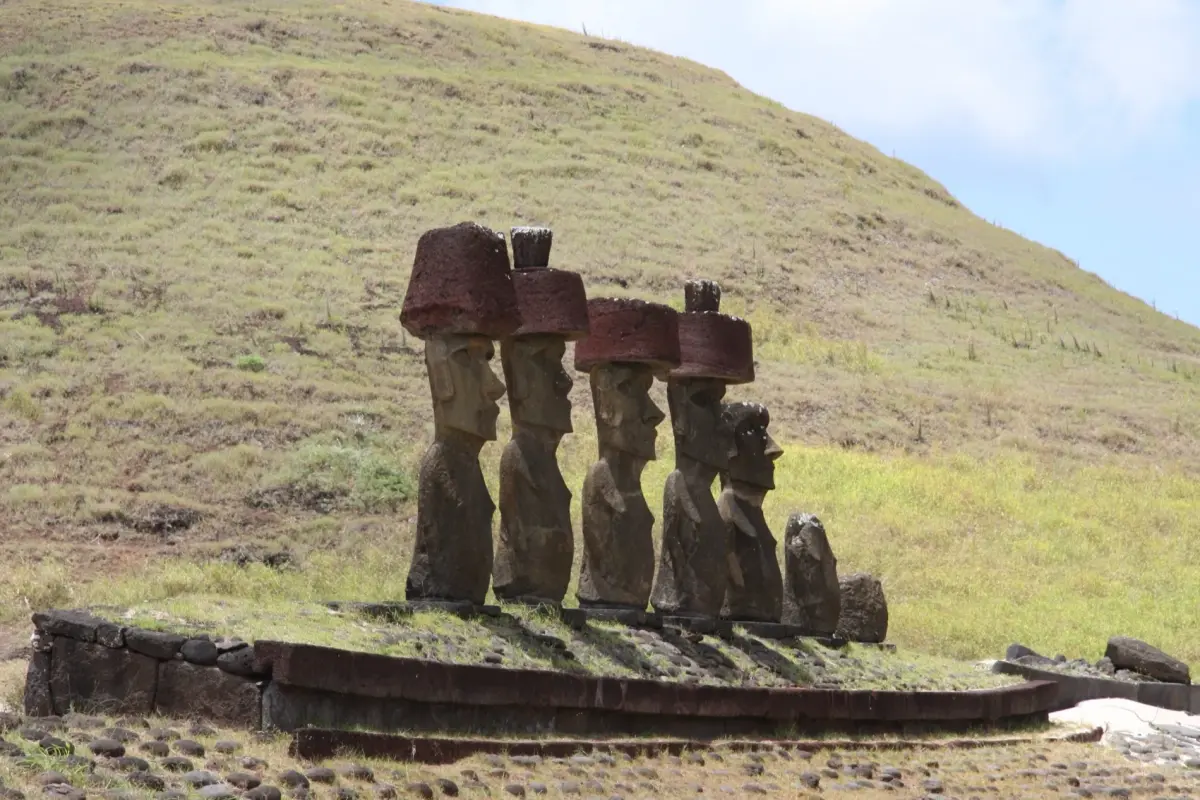
Rapa Nui is the most iconic of Chile’s UNESCO sites, yet the island resists being reduced to its moai. The statues are extraordinary, but the island’s power comes from the relationship between sculpture, volcanic land, ocean, and ancestral presence. You do not simply “visit” Rapa Nui. You enter a landscape where archaeology is not separated from daily life, where ceremonial platforms face the sea, where quarry slopes still seem full of unfinished intention, and where silence feels active.
The essential experience begins at Rano Raraku, the volcanic quarry where many moai were carved. This is one of the great archaeological landscapes of the world, not because it is polished, but because it feels suspended mid-creation. Statues emerge from the grass, lean into the hillside, stand half-buried, or remain unfinished in the rock. The place has the strange intimacy of a workshop abandoned by giants.
Ahu Tongariki is the great sunrise moment. Fifteen restored moai stand with their backs to the Pacific, and the first light changes them gradually rather than dramatically. Arrive early enough to let your eyes adjust to the dark outline of the platform. The point is not only the photograph. It is the slow recognition of scale.
Orongo, near the crater of Rano Kau, reveals another layer of Rapa Nui: the birdman cult, cliffside ritual, petroglyphs, and the vast crater lake below. Here the island feels both ceremonial and exposed, held between freshwater, ocean, wind, and sky.
Rapa Nui deserves at least four full days. A shorter visit can cover the major sites, but it rarely allows the island to settle into memory. Stay longer if possible, especially if you want to walk, visit the museum, explore Anakena beach, and return to the same places in different light.
03Historic Quarter of Valparaíso: The Port City Built on Improvisation
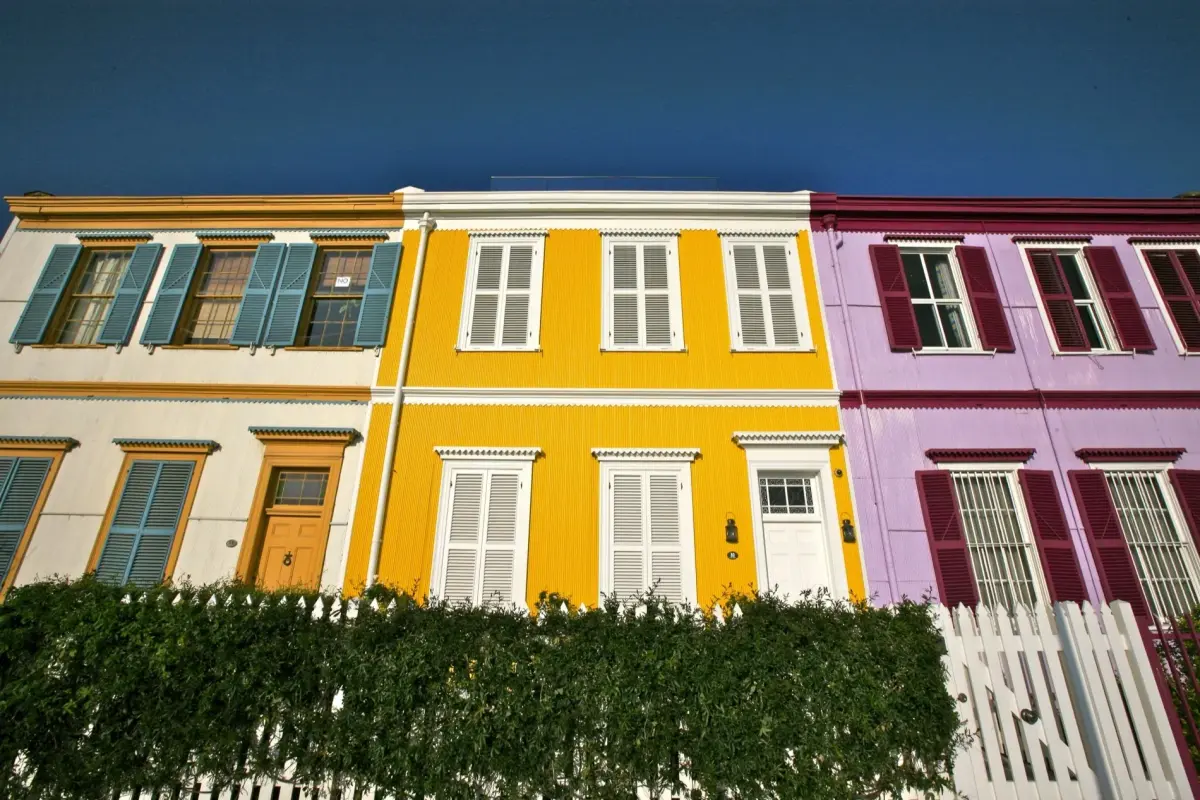
Valparaíso is not beautiful in the controlled, polished sense. Its beauty is unstable, layered, salt-worn, and theatrical. The city rises from the Pacific in steep hills, stairways, elevators, painted walls, old mansions, corrugated metal, and balconies that seem to float over the harbour. UNESCO recognises its historic quarter as part of Chile’s World Heritage list, and Chile Travel describes the city through its hills, stairways, elevators, maze-like streets, and architecture adapted to coastal geography.
The pleasure of Valparaíso is movement. You climb, pause, turn, descend, cross a passage, look back, and suddenly the city rearranges itself. Cerro Alegre and Cerro Concepción are the most accessible places to begin, especially for first-time visitors. Their boutique hotels, galleries, cafés, murals, and restored houses make them easy to love, but the deeper character of Valparaíso appears when you move slowly enough to notice the old port logic behind the colours.
The ascensores, the historic funicular elevators, are part of the city’s emotional architecture. They are not merely transport. They express the way Valparaíso solved its geography: not by flattening the hills, but by negotiating with them.
Visit in the morning for quiet streets and softer light. Stay into evening for restaurants, harbour views, and that slightly melancholic atmosphere that makes Valparaíso feel literary even before anyone mentions Pablo Neruda. Many travellers visit as a day trip from Santiago, about 120 kilometres away; Chile Travel gives the drive via Ruta 68 as roughly 1 hour and 40 minutes.
Still, one night changes the experience. Valparaíso after the day-trippers leave is more intimate, more textured, and more honest.
04Humberstone and Santa Laura Saltpeter Works: Ghost Towns in the Atacama
In northern Chile, near Iquique, the desert holds one of the country’s most haunting UNESCO sites. Humberstone and Santa Laura Saltpeter Works are former nitrate production settlements, linked to the period when Chile became a major global producer of saltpeter in the late nineteenth and early twentieth centuries. Chile Travel describes them as ghost towns and tangible evidence of that industrial era.
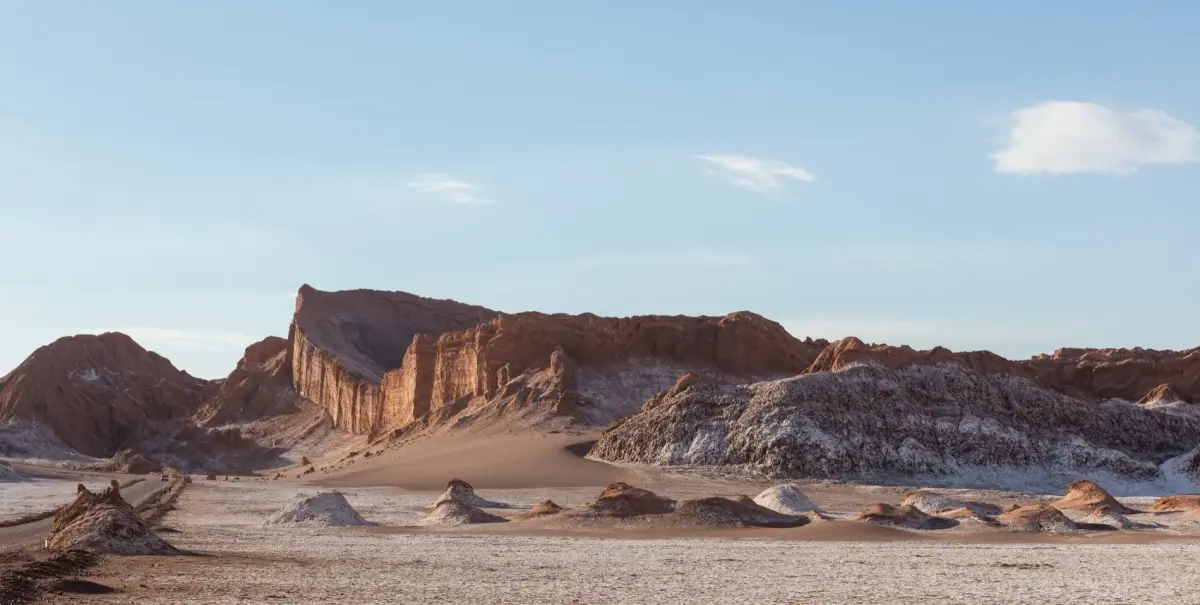
The atmosphere here is severe and unforgettable. The Atacama does not soften ruins; it preserves them with a dry, almost forensic clarity. Streets, workers’ houses, machinery, theatres, schools, and industrial remains sit under hard light, surrounded by emptiness. The silence is not romantic at first. It is industrial silence, the silence after extraction, labour, ambition, wealth, abandonment, and heat.
Humberstone is the more immediately legible of the two sites, with its streets and social buildings allowing visitors to imagine the structure of daily life. Santa Laura feels more raw and mechanical, with the remains of processing infrastructure giving the visit a different weight. Together, they show not only architecture and industry, but a whole social system built in a harsh landscape.
This is not a place to rush. Arrive prepared for sun, dryness, and exposure. The experience is strongest when you allow time to move through the town slowly, entering rooms, looking at faded surfaces, and understanding that this was not a museum built to resemble a settlement. It was a settlement.
Chile Travel notes that Humberstone and Santa Laura are about 42 minutes by road from Iquique, making the city the most practical base.
05Sewell Mining Town: The City of Stairs in the Andes
Sewell is one of Chile’s most visually striking UNESCO sites because it sits where a town should almost not be: high in the Andes, built around copper mining, without the normal horizontal logic of streets. Known as the “City of Stairs,” Sewell developed as a company town connected to the El Teniente copper mine, with buildings and workers’ housing dating from the early twentieth century. Chile Travel notes that accommodation was built there for more than 15,000 workers and that the town is reached from Rancagua by a 60-kilometre drive into the Andes.
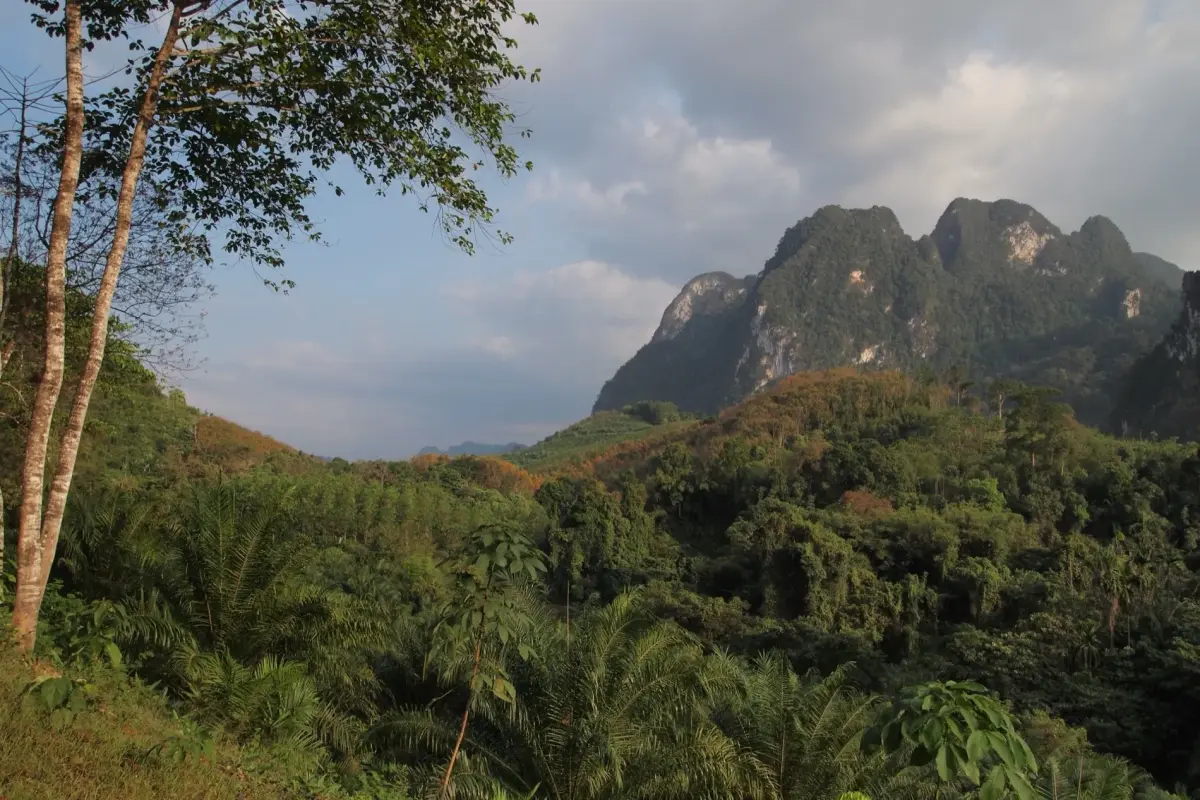
The experience is architectural and psychological. Sewell does not look like a typical mining town. It rises in colour-coded buildings, stairways, slopes, and corridors, shaped by altitude and necessity. There is no ordinary street life here because the mountain dictated another form of urbanism.
Visiting Sewell feels like entering a preserved model of industrial order: work, housing, hierarchy, movement, and isolation arranged vertically. The Andes around it are not background scenery. They are the reason the town exists and the reason it feels so strange.
Sewell is usually visited on organised tours, partly because of access conditions linked to the mining area. It works well as a long day trip from Santiago or Rancagua. Chile Travel places it in Machalí district and gives approximate access times of 2 hours 30 minutes from Santiago and 1 hour from Rancagua.
To see them all is not a simple checklist. It is a journey through the long vertical drama of Chile itself: Pacific islands, desert ghost towns, copper mountains, painted port hills, wooden churches in the rain, ancient coastal burials, and Inca roads crossing the dry north.
06Churches of Chiloé: Wooden Faith in Rain Country
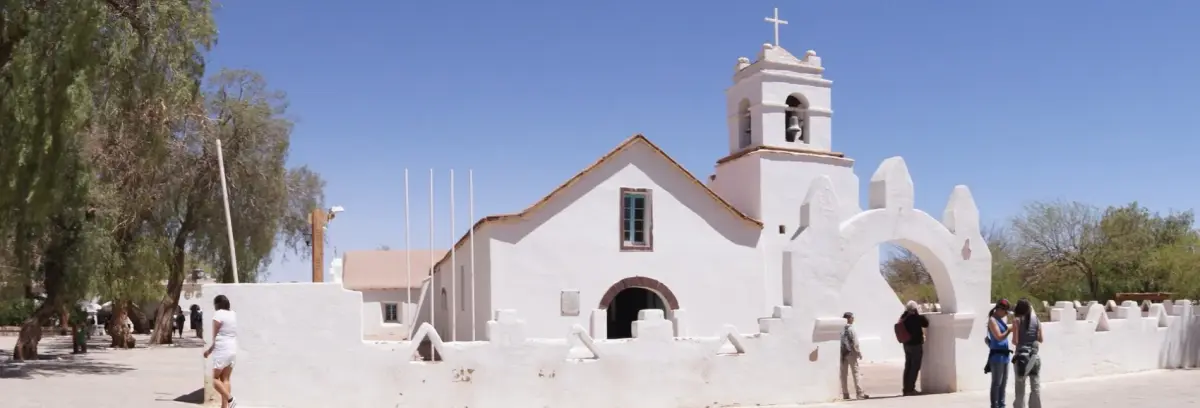
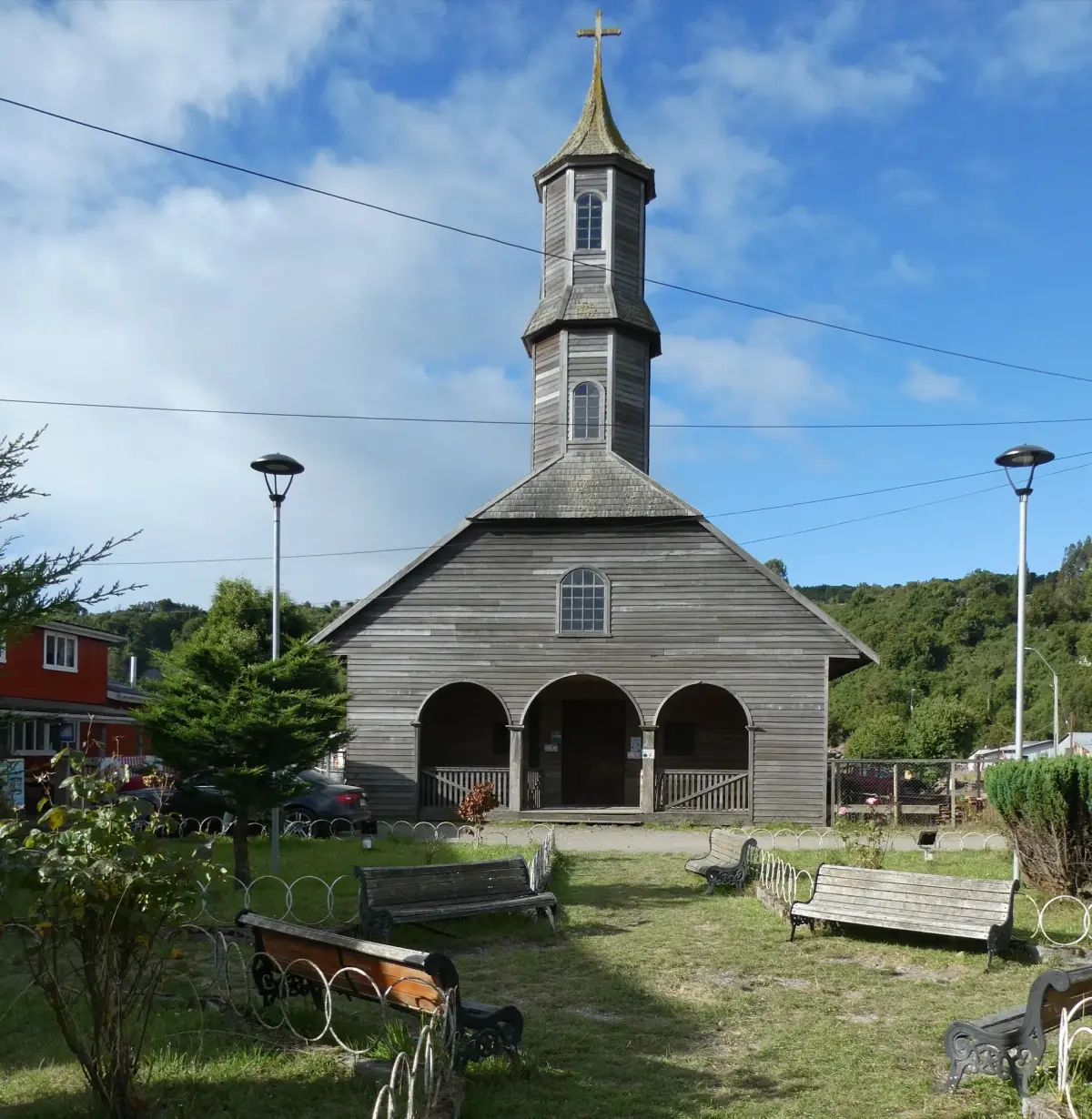
Chiloé changes the tone of the whole journey. After desert, copper, and port cities, the archipelago feels humid, green, intimate, and deeply atmospheric. The UNESCO-listed Churches of Chiloé are not grand cathedrals in the European sense. Their power lies in timber, craftsmanship, island devotion, and the fusion of local building traditions with Catholic forms.
Chile Travel describes Chiloé as a land of myths, legends, and rich culture, where the churches express religious syncretism from the mid-sixteenth century onward. The same source notes that the churches combine local techniques and materials with Spanish design.
These churches are best experienced as part of the island landscape rather than as isolated monuments. Their wooden towers rise above small towns, coastal roads, fishing communities, and wet fields. The interiors often feel warm and human-scaled, with wood creating an atmosphere very different from stone churches elsewhere in Latin America.
Castro, Ancud, Dalcahue, Achao, Chonchi, and smaller villages all help frame the route. The pleasure is not only in seeing the churches, but in moving between them by road and ferry, watching the weather shift, eating seafood, and feeling how architecture belongs to island life.
Chiloé deserves at least three or four days. With less time, choose a base such as Castro and visit several nearby churches. With more time, let the archipelago unfold slowly. The fastest access is usually via Puerto Montt, followed by the ferry crossing over the Chacao Channel toward Ancud, as Chile Travel outlines.
07Chinchorro Culture: The Oldest Known Mummies and the Desert Coast
The Chinchorro UNESCO site in Arica and Parinacota is one of the most profound cultural stops in Chile. It is not visually monumental in the way Rapa Nui or Valparaíso is. Its importance is older, quieter, and more unsettling. The Chinchorro culture lived along the northern coast of Chile thousands of years ago, and their artificial mummification practices are among the oldest known in the world. Chile Travel describes the Chinchorro mummies as the oldest recorded and links them to a culture that lived on Chile’s northern coast more than 7,000 years ago.
This is a site that asks for a different kind of attention. It is not about spectacle. It is about the human body, death, memory, and care. The Chinchorro transformed the dead through complex funerary practices long before Egyptian mummification became famous in the global imagination.
Arica is the natural base. Museums such as Colón 10 and San Miguel de Azapa are essential for understanding the culture before or alongside visiting the broader archaeological landscape. Chile Travel specifically names these museums as places in Arica where Chinchorro vestiges can be seen.
The surrounding desert coast matters. The dryness of the region, the proximity to the Pacific, and the archaeological depth of the landscape create the context. This part of Chile feels ancient in a way that is difficult to dramatise but impossible to forget.
08Qhapaq Ñan: The Andean Road System Through Northern Chile
The Qhapaq Ñan is different from Chile’s other UNESCO sites because it is not only Chilean. It is a vast Andean road system associated with the Inca world and shared across several South American countries. UNESCO lists the Qhapaq Ñan, Andean Road System, among Chile’s World Heritage properties.
In Chile, the route is spread through several northern zones, especially in the Atacama and high Andean regions. Chile Travel notes one known stretch near Diego de Almagro, close to the route toward Copiapó in the Atacama Region.
The Qhapaq Ñan is best understood not as a single attraction, but as a way of seeing the Andes. Roads are never neutral. They reveal power, trade, ritual, communication, and the ability to bind extreme landscapes into one system. In the Chilean north, this means dry valleys, high passes, mining routes, desert settlements, and archaeological traces that may look modest until you understand their scale.
For travellers, this site requires more planning than Valparaíso or Chiloé. Some sections are remote, and interpretation can be limited compared with more conventional museums or urban heritage areas. The reward is intellectual and atmospheric: the feeling of standing inside an ancient network rather than in front of a single monument.
Copiapó, Diego de Almagro, and the wider Atacama region can form the practical base, depending on the exact section visited and whether you travel with a specialist guide.
09How to Plan a Complete UNESCO Trip Through Chile
The most elegant route begins in Santiago. Spend two or three days there to recover from arrival, then visit Valparaíso and Sewell from the capital. Valparaíso can be done as a day trip, but one night is better. Sewell usually works as a guided day trip.
From Santiago, fly north. Arica should come first if you want to begin with Chinchorro culture, then continue south toward Iquique for Humberstone and Santa Laura. After that, connect toward Copiapó or the Atacama Region for the Qhapaq Ñan sections. This northern sequence creates a powerful archaeological and desert chapter.
Return to Santiago and fly south to Puerto Montt for Chiloé. Give the archipelago several days, especially if you care about photography, food, wooden architecture, and slow travel. Then return to Santiago for the final, most remote chapter: Rapa Nui.
Rapa Nui should ideally come last. After crossing Chile’s mainland from north to south, the island feels like a culmination rather than an appendix. It changes the emotional scale of the whole journey.
A complete, comfortable itinerary needs around three weeks. Two weeks is possible only with careful flights and a willingness to move quickly. For a premium, unhurried trip, plan twenty-one to twenty-five days.
10Best Time to Visit Chile’s UNESCO Sites
There is no single perfect season for every site because Chile is too long and varied. The central sites, Valparaíso and Sewell, are easiest in spring and autumn, when temperatures are pleasant and the light is generous. Northern Chile can be visited much of the year, though desert sun and altitude require respect. Chiloé is atmospheric even in rain, but late spring through early autumn gives softer conditions for road travel and photography. Rapa Nui is a year-round destination, though shoulder months often feel more relaxed.
The deeper rule is simple: do not plan this route as if Chile were one climate. Pack for desert heat, coastal wind, mountain exposure, island humidity, and Pacific weather.
11Final Thoughts: Why Chile’s UNESCO Sites Belong Together
Chile’s UNESCO sites are not the country’s most obvious travel fantasy. They are not Torres del Paine, the marble caves, the Atacama salt flats, or the wine valleys. But they reveal something more layered: how people built, buried, worshipped, worked, travelled, traded, carved, and endured in extreme landscapes.
To see every UNESCO site in Chile is to understand that this country is not defined by scenery alone. It is defined by human presence inside difficult beauty. Stone figures on a Pacific island. Wooden churches in rain. Painted hills above a port. Desert factories emptied by time. A mining town clinging to the Andes. Ancient mummies by the northern coast. Roads crossing the high dry spine of South America.
That is the real journey: not simply across Chile, but through the many ways people have made meaning at the edge of the world.