A refined travel guide to the most beautiful places in Nepal’s lakeside city
Pokhara does not announce itself loudly. It does not need to. The city works by reflection: the pale morning light on Phewa Lake, the white line of the Annapurna range appearing above the roofs, the impossible fin of Machapuchare rising from cloud as if drawn by hand. Kathmandu may be where Nepal begins for many travellers, but Pokhara is where the country opens its lungs.
Set in central Nepal, Pokhara is widely known as the gateway to the Annapurna region, but to treat it only as a trekking base is to miss its most seductive quality. This is a city of water, terraces, soft air, long breakfasts, temple bells, paragliders, mountain museums, lakeside hotels, and slow afternoons that seem to stretch beneath the snow peaks. Phewa Lake is the travellers’ focal point of Pokhara and one of the defining landscapes of the city, while nearby hills such as Sarangkot and the World Peace Pagoda offer some of the most memorable Himalayan viewpoints in the valley.
01Why Pokhara feels different
Pokhara is calmer than Kathmandu, greener than many expect, and more atmospheric than a simple adventure hub. Its drama is vertical: lake below, forested hills in the middle distance, and the Himalayas rising above everything.
This is the kind of city where the best moments happen before the itinerary begins. A boatman unties a wooden rowboat at first light. Dogs sleep in the warmth outside a café. A traveller sits with masala tea while Machapuchare appears for five minutes, then disappears behind cloud. The mountains are not always visible, which makes them more powerful. Pokhara teaches patience.
02Phewa Lake: the mirror of the city
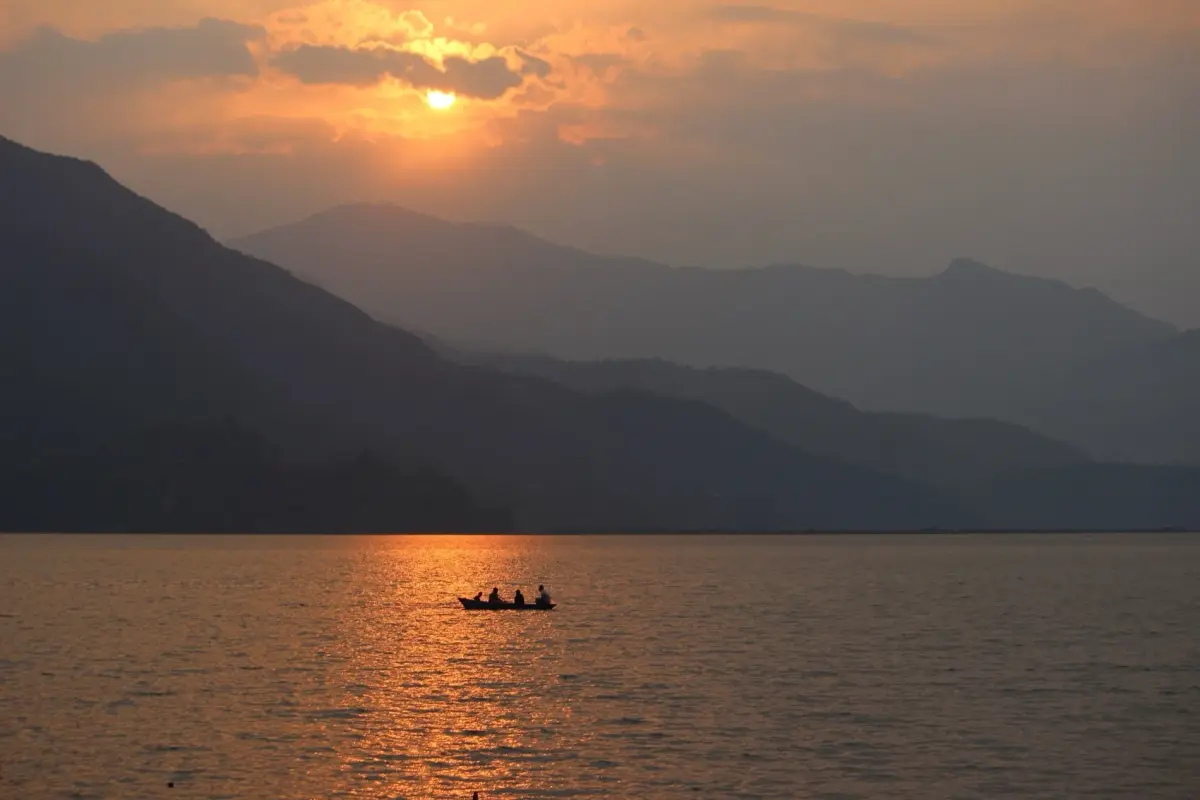
Phewa Lake is the emotional centre of Pokhara. Come early, before the motorbikes and breakfast menus and souvenir shops wake fully. The water can be almost still then, carrying the faint reflection of the hills and, on clear mornings, the snow peaks beyond.
A boat ride on Phewa should not be rushed. Choose a wooden boat, go out slowly, and let the city fall away behind you. At the centre of the lake sits Tal Barahi Temple, a small island shrine that adds a ritual note to the landscape. Around the lakefront, Pokhara becomes soft and cinematic: cafés with terraces, guesthouses hidden behind bougainvillea, travellers walking without urgency.
For a premium travel piece, this is the place to linger in the writing. Do not describe Phewa only as “a lake.” Describe the way the colour changes: silver at dawn, blue by late morning, violet in the evening, black under monsoon cloud.
03Lakeside: where Pokhara lives slowly
Lakeside is the most convenient base for first-time visitors. It has restaurants, cafés, yoga studios, bookshops, trekking agencies, boutique hotels, and easy access to Phewa Lake. It is also where Pokhara’s international mood is strongest: Himalayan expedition culture mixed with slow-travel comfort.
The best way to experience Lakeside is not by ticking off places. Walk. Start near the lake before breakfast, pause for coffee, browse small shops, return at sunset. The area can be busy, but its rhythm remains gentler than Nepal’s larger urban centres.
For a more refined stay, choose a property slightly removed from the loudest stretch of Lakeside, ideally with a lake or mountain view. For a more secluded experience, consider hill lodges and resorts outside the city; recent luxury hotel roundups have highlighted Nepal’s growing range of mountain and heritage stays, including properties around Pokhara.
04Sarangkot: sunrise over the Annapurna range
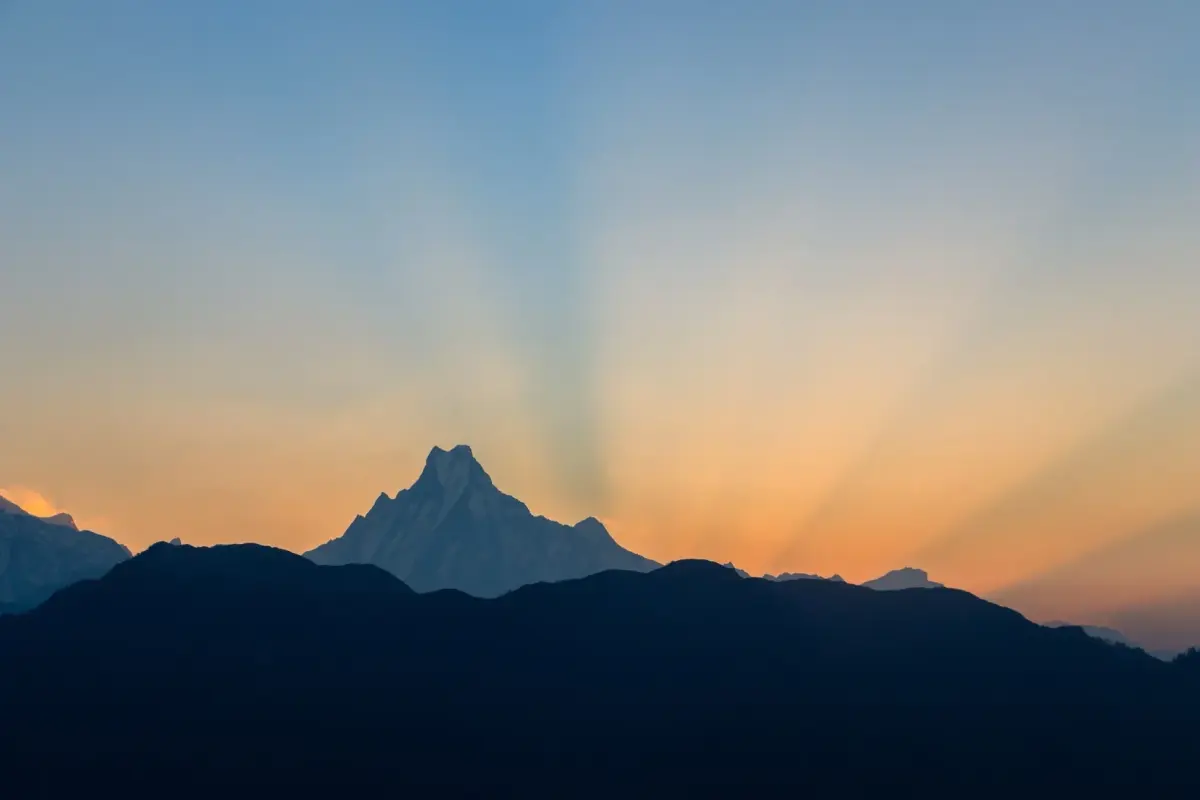
Sarangkot is Pokhara’s classic sunrise viewpoint, and it is worth the early alarm. The experience begins in darkness: cold air, quiet roads, headlights climbing the hill. Then the horizon slowly separates from the sky. First the outline of the Annapurna range appears, then a faint rose colour touches the snow, and finally Machapuchare sharpens into view.
This is one of the most important scenes in a Pokhara article because it gives the reader the scale of the place. The city below looks temporary. The mountains look eternal.
Sarangkot is also associated with paragliding, one of Pokhara’s signature adventure experiences. But even for travellers who have no desire to fly, the viewpoint is essential. It shows why Pokhara has such a hold on people: the Himalayas are not distant here. They feel present, almost personal.
05Machapuchare: the mountain that defines Pokhara
Machapuchare, often called Fishtail Mountain because of its distinctive summit shape, is the visual soul of Pokhara. It appears in fragments: above a rooftop, between clouds, behind a field, reflected faintly in water. In a strong article, this mountain should become a character.
Its beauty is not only physical. Machapuchare carries a sense of distance and reverence. It has long been treated as sacred, and unlike many Himalayan peaks, it has not become a summit trophy in the public imagination. For visitors, this gives the mountain a rare dignity. You do not conquer it. You wait for it.
06World Peace Pagoda: the best view back toward the lake
The World Peace Pagoda sits on a hill above the southern side of Phewa Lake and offers one of the finest views over Pokhara, the lake, and the Annapurna range. Nepal Tourism Board describes it as a hilltop vantage point with spectacular views and four Buddha images facing four directions.
The journey matters. You can reach it by road, by hiking, or by combining a boat across Phewa with a climb through forest. The pagoda itself is bright, quiet, and sculptural, but the real reward is the view: the city spread below, the lake holding the sky, the mountains beyond.
Go in the late afternoon if you want softer light. Stay long enough for the city to begin glowing below.
07Pumdikot Shiva Statue: a newer panoramic landmark
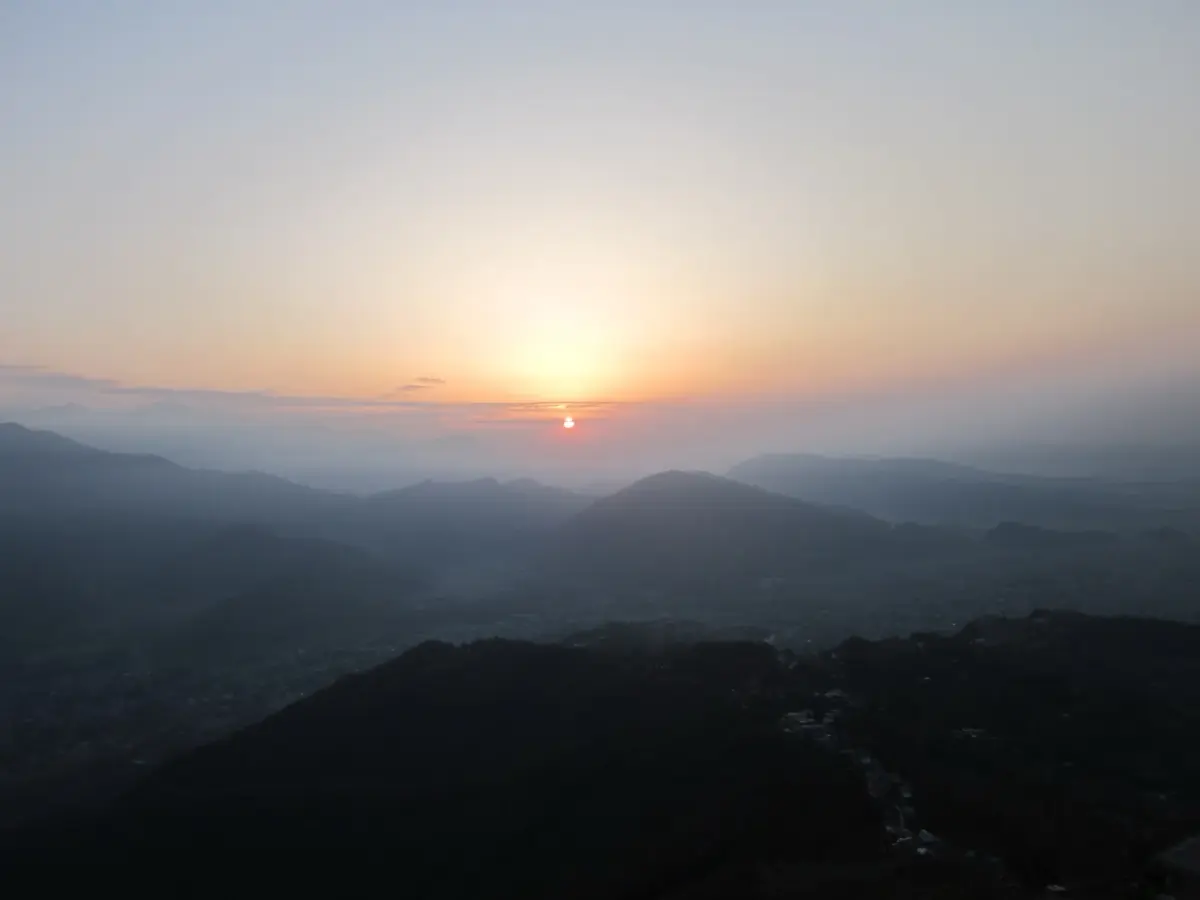
Pumdikot has become one of Pokhara’s more prominent modern viewpoints, known for its large Shiva statue and broad views over the valley. It pairs well with the World Peace Pagoda because both sit above the city and reveal Pokhara’s geography: water, hills, urban life, and the snowy wall beyond.
This stop works especially well for travellers who want a fuller city circuit without committing to a long trek. It is photogenic, accessible, and dramatic in clear weather.
08Devi’s Falls and Gupteshwor Mahadev Cave
Devi’s Falls is one of Pokhara’s unusual natural landmarks: a waterfall that disappears into an underground channel. Nearby, Gupteshwor Mahadev Cave adds a sacred and subterranean counterpoint. Many current city tours pair the two because they sit close together and show a different side of Pokhara: not the open lake and sky, but water vanishing into stone.
These are not the most elegant places in the city, and they can feel busy. But they are part of Pokhara’s texture. Visit early or with a good guide who can frame the geology, mythology, and local significance rather than rushing you through the stops.
09International Mountain Museum
The International Mountain Museum is essential for travellers who want context. Pokhara is not only beautiful because mountains surround it; it is beautiful because those mountains have shaped culture, ambition, risk, trade, spirituality, and identity.
Nepal Tourism Board notes that the museum was built to record, document, exhibit, and chronicle the evolution of mountain and mountaineering activities around the world.
This is where a sophisticated visitor begins to understand the difference between looking at the Himalayas and understanding them. The museum gives names, stories, equipment, routes, communities, and consequences to the peaks that appear so effortlessly from a café terrace.
Pokhara does not announce itself loudly. It does not need to. The city works by reflection: the pale morning light on Phewa Lake, the white line of the Annapurna range appearing above the roofs, the impossible fin of Machapuchare rising from cloud as if drawn by hand. Kathmandu may be where Nepal begins for many travellers, but Pokhara is where the country opens its lungs.
10Begnas Lake: Pokhara without the obvious crowd
If Phewa is Pokhara’s public face, Begnas Lake is its quieter sibling. It lies outside the main tourist centre and feels more rural, more spacious, and less curated. Come here for stillness: green hills, local boats, simple lakeside meals, and fewer distractions.
Begnas is ideal for travellers staying longer in Pokhara or those who want one day away from Lakeside. It is also a strong internal link opportunity for a future article: “Begnas Lake: Pokhara’s Quiet Escape Beyond Lakeside.”
11The Old Bazaar and Bindhyabasini Temple
To understand Pokhara beyond the lakefront, go into the older parts of the city. The Old Bazaar has a different rhythm: local commerce, traditional houses, small shops, and fewer travellers. Nearby Bindhyabasini Temple adds a devotional layer, especially in the morning when worshippers arrive with flowers and offerings.
This part of the city prevents the article from becoming only “lake and mountains.” It gives Pokhara human depth.
12Paragliding: seeing Pokhara from the air
Pokhara is one of Asia’s most memorable places to paraglide because the landscape is unusually theatrical: lake below, city beneath, hills around, Himalayas ahead. For many visitors, it becomes the defining adrenaline moment of the trip.
But in a premium guide, present paragliding carefully. Recommend licensed, reputable operators, check current flying conditions, and avoid treating the experience as casual. Weather, regulation, and launch sites can change. The magic is real, but so is the need for professionalism.
13A perfect slow day in Pokhara
Start before sunrise. Go to Sarangkot, then return to Lakeside for a late breakfast with a mountain view. Spend the late morning on Phewa Lake by boat. Visit Tal Barahi Temple if the mood feels right. Rest during the warmest hours.
In the afternoon, drive or hike toward the World Peace Pagoda. Let the light soften. Watch the lake turn silver. Return to Lakeside for dinner, preferably somewhere with an open terrace and no hurry.
That is Pokhara at its best: not overplanned, not empty, not passive. Spacious.
14Where to stay
For first-time visitors, Lakeside is the most practical choice. It gives easy access to restaurants, cafés, boats, shops, and guides. For romance or retreat, choose a quieter lakeside hotel or a hill property with views. For travellers seeking a more elevated experience, look at mountain lodges and boutique resorts outside the busiest centre.
The best rooms in Pokhara are not necessarily the most opulent. They are the ones where you wake up, open the curtains, and see either water, hills, or snow.
15When to visit Pokhara
The clearest mountain views usually come outside the heavy monsoon months. Autumn and spring are the classic travel seasons in Nepal, especially for trekking and Himalayan visibility. Winter can bring crisp skies and colder mornings. Monsoon gives lush landscapes, dramatic clouds, and fewer visitors, but mountain views can be obscured and road conditions less predictable.
For this specific kind of article — reflective, atmospheric, slow — early morning matters more than season. Pokhara is always better before the day becomes busy.
16How long to stay
Two nights are enough only to understand that you should have stayed longer. Three to four nights give the city room to work on you: one sunrise, one lake morning, one cultural day, one slow day with no agenda.
For a refined itinerary, I would recommend four nights:
- Day 1: arrive, settle into Lakeside, sunset by Phewa.
- Day 2: Sarangkot sunrise, lake, cafés, slow afternoon.
- Day 3: World Peace Pagoda, Pumdikot, Old Bazaar.
- Day 4: Begnas Lake or International Mountain Museum.
- Day 5: depart slowly or continue toward Annapurna.
17What to write next for internal links
This article can naturally lead readers into:
- Where to Stay in Pokhara: Lakeside Hotels, Hill Lodges and Mountain Views
- Sarangkot Sunrise: The Most Beautiful Morning in Pokhara
- Phewa Lake Guide: Boats, Reflections and the Best Lakeside Walks
- Pokhara vs Kathmandu: Which City Should You Visit First?
- Begnas Lake: Pokhara’s Quiet Escape Beyond Lakeside
- The Best Luxury Lodges Near Pokhara and the Annapurna Foothills
18Final impression
Pokhara is not a city that reveals itself through monuments alone. Its real architecture is made of light, water, weather, and distance. The lake holds the mountains for a moment, then loses them. Clouds close over Machapuchare. A boat crosses the reflection and breaks it into silver lines.
That is why people stay longer than planned.
Pokhara does not simply show you the Himalayas. It gives you time to feel what it means to live beneath them.