Among Yunnan’s best-known historic towns, Jianshui often remains overshadowed by Dali and Lijiang. Most travelers know it as a convenient stop on the way to the Yuanyang Rice Terraces. Some spend only a single night here, while others pass through between trains and buses. Almost all of them underestimate the place.
The reason is not that Jianshui contains China’s most spectacular monuments or its most beautiful historic streets. The appeal lies elsewhere. Jianshui offers a combination that has become increasingly difficult to find in many of China’s popular tourist destinations: historic architecture that remains part of everyday life.
Behind its ancient gates stand Confucian temples, family mansions, stone bridges, and a network of streets where history still belongs to the town rather than serving as a backdrop for visitors. The best way to experience Jianshui is to abandon the idea of seeing everything at once. This is a place that reveals itself gradually.
01A Town Best Understood on Foot
First impressions of Jianshui are often quieter than expected. There are no dramatic mountain landscapes demanding attention, as in Lijiang. There is no vast lake like the one that defines Dali. There are no endless rows of souvenir shops designed for visitors from around the world.
Instead, you find old city walls, historic gates, low buildings topped with grey roof tiles, and the ordinary rhythm of a small Yunnan town. Schoolchildren walk home after class, elderly men sit outside tea houses, shopkeepers arrange goods in front of their stores, and the smell of grilled tofu and rice noodles drifts from nearby restaurants.
This is why Jianshui leaves such a strong impression on travelers who stay longer than a few hours. The historic center does not exist separately from the modern town. The two are woven together so naturally that, after a while, the distinction between attraction and everyday life begins to disappear.
02Chaoyang Gate
Almost every walk through the old town begins at Chaoyang Gate. Built during the Ming Dynasty, it rises above the eastern entrance to the historic center and remains the town’s most recognizable landmark.
Locals sometimes refer to it as a “small Tiananmen” because of its proportions and architectural style. The comparison makes sense visually, but the atmosphere could not be more different. In Beijing, similar structures feel connected to the scale and authority of an imperial capital. In Jianshui, the same architectural forms feel far more intimate.
The best time to visit is early in the morning, when the town is just beginning to wake up. Shopkeepers lift their shutters, cyclists pass beneath the gate, and sunlight slowly reaches the red walls of the tower. It is one of those rare places where a major landmark still feels like part of daily life.
03The Confucius Temple and the Memory of Old China
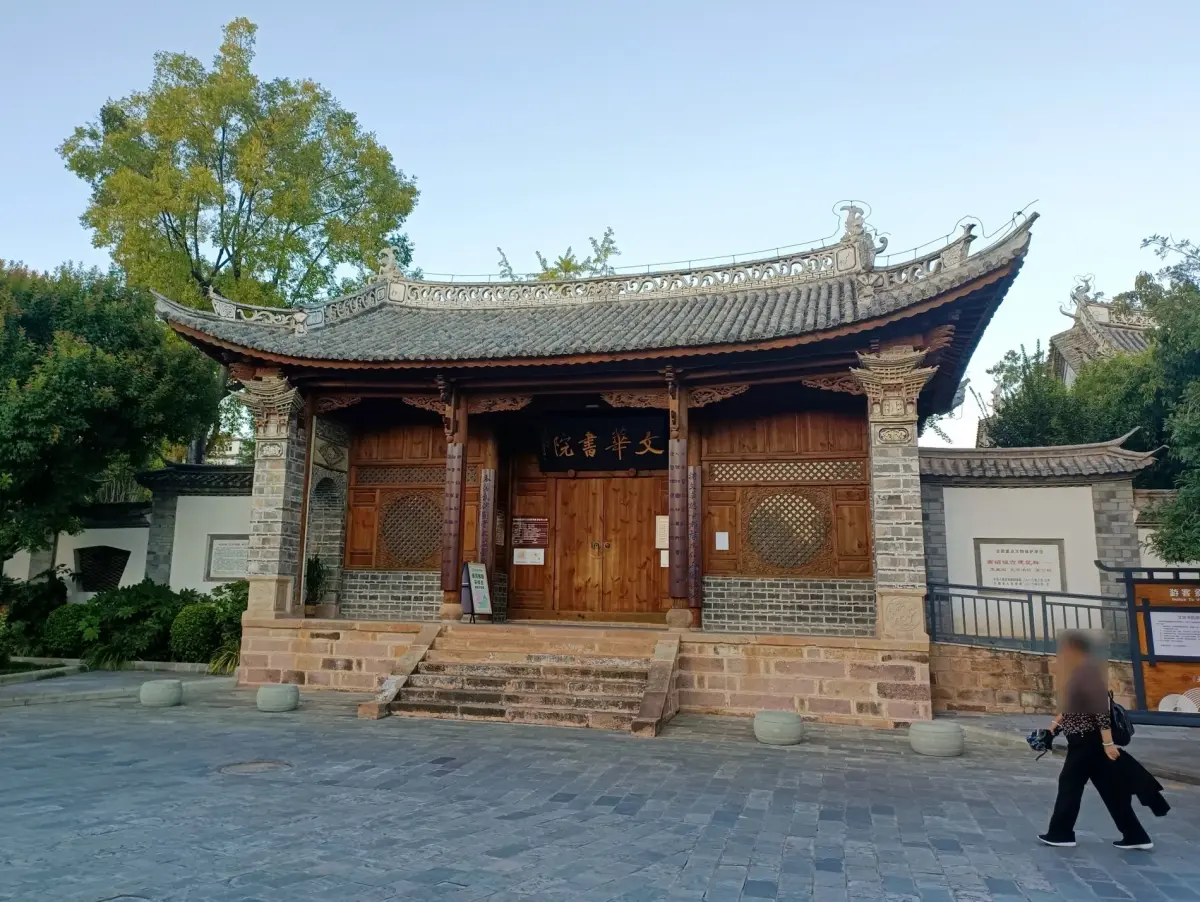
If there is one place that explains Jianshui’s historical importance, it is the Confucius Temple. Many visitors are surprised to learn that the complex is considered one of the largest Confucian temples in China after the famous temple in Qufu.
For centuries, Jianshui served as an educational center for southern Yunnan. Students came here to prepare for the imperial examinations that determined entry into the civil service. Even today, the temple impresses not through grandeur but through a sense of order and balance. Spacious courtyards lead into one another, old trees cast shadows across stone pathways, and pavilions reflect in still water.
The longer you spend inside the complex, the easier it becomes to understand why Confucian temples were never simply religious sites. They were places designed for learning, reflection, and intellectual discipline.
04The Zhu Family Garden
If the Confucius Temple represents the intellectual side of old Jianshui, the Zhu Family Garden reveals how the town’s wealthiest residents once lived. Built during the late Qing Dynasty, the estate consists of an extensive network of courtyards, halls, gardens, and residential buildings.
It looks impressive in photographs, but it becomes even more interesting in person. The appeal lies in the details: carved wooden panels, stone ornamentation, interconnected courtyards, and the way each room faces inward toward family space rather than outward toward the street.
Walking through the estate, it is easy to imagine several generations of the same family living here. Guests would have been welcomed in one hall, celebrations held in another, children prepared for examinations, and elders spent long evenings drinking tea and talking.
More than a historic building, the Zhu Family Garden offers one of the clearest glimpses into the structure of a traditional Chinese household.
05The Wells That Shaped Jianshui
Among all of Jianshui’s attractions, its ancient wells are often the most memorable. At first this may seem surprising, but their importance becomes clearer the longer you stay.
For centuries, the town depended on dozens of wells scattered throughout its neighborhoods. Some are still in use today, while others remain gathering places for local residents. These water sources played an important role in the development of one of Jianshui’s best-known culinary traditions: Jianshui tofu.
While exploring the old town, it is worth wandering into side streets and smaller lanes. Some of the most interesting discoveries happen not near the major landmarks but beside a centuries-old well that continues to serve the community.
06Why Everyone Talks About Jianshui Tofu
Every region in China has dishes it proudly calls its own. In Jianshui, that dish is tofu.
Small cubes of tofu are grilled over charcoal until the outside turns golden while the interior remains soft. The process looks so simple that it hardly seems capable of producing anything remarkable. Then the first plate arrives, followed by another, and before long you realize that an hour has passed at the table.
Part of the experience goes beyond flavor. This is a deeply social food. People gather around the grill, talk, watch the cooking process, and eat gradually as fresh batches arrive.
Evenings like this feel especially natural in Jianshui. The town seems designed to encourage people to slow down.
The reason is not that Jianshui contains China’s most spectacular monuments or its most beautiful historic streets. The appeal lies elsewhere. Jianshui offers a combination that has become increasingly difficult to find in many of China’s popular tourist destinations: historic architecture that remains part of everyday life.
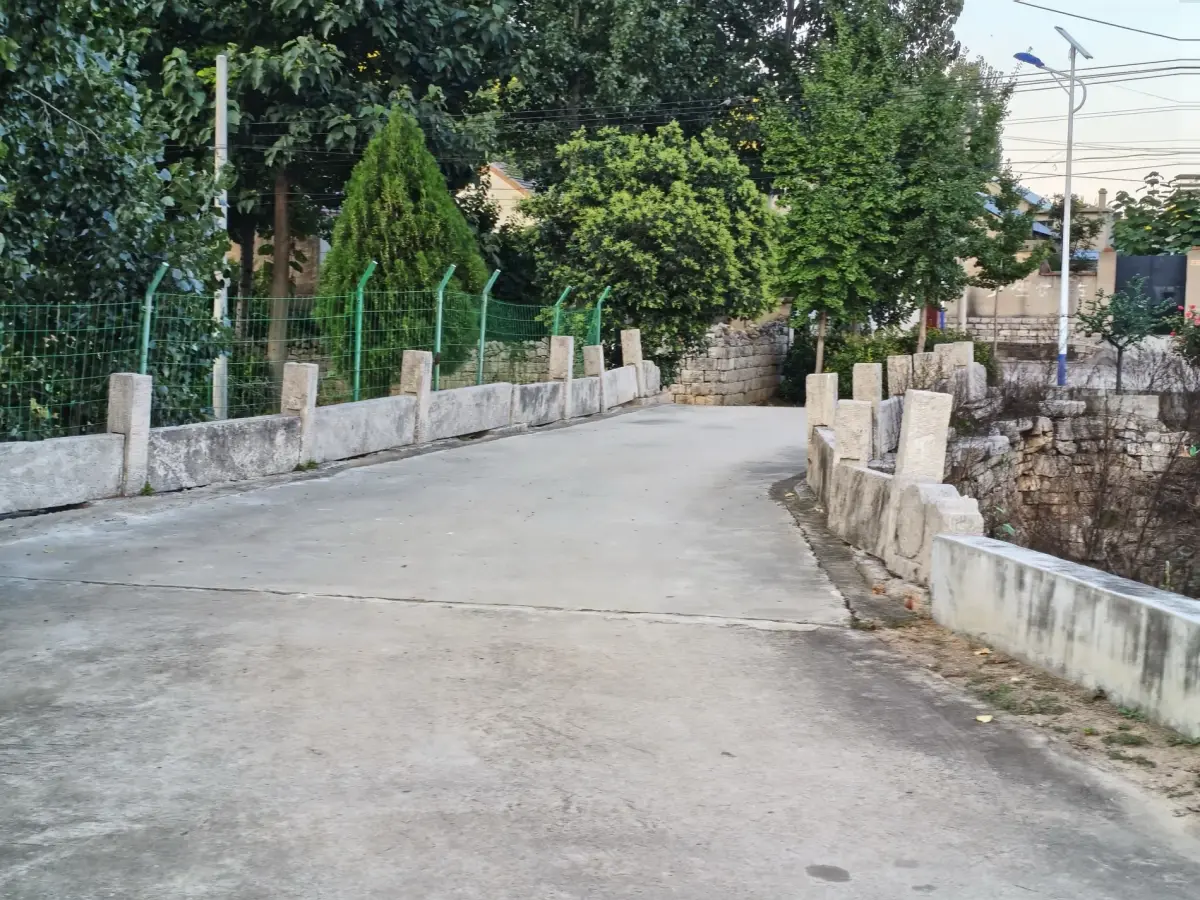
07Double Dragon Bridge
While most of Jianshui’s attractions are concentrated within the old town, Double Dragon Bridge reveals a different side of the region.
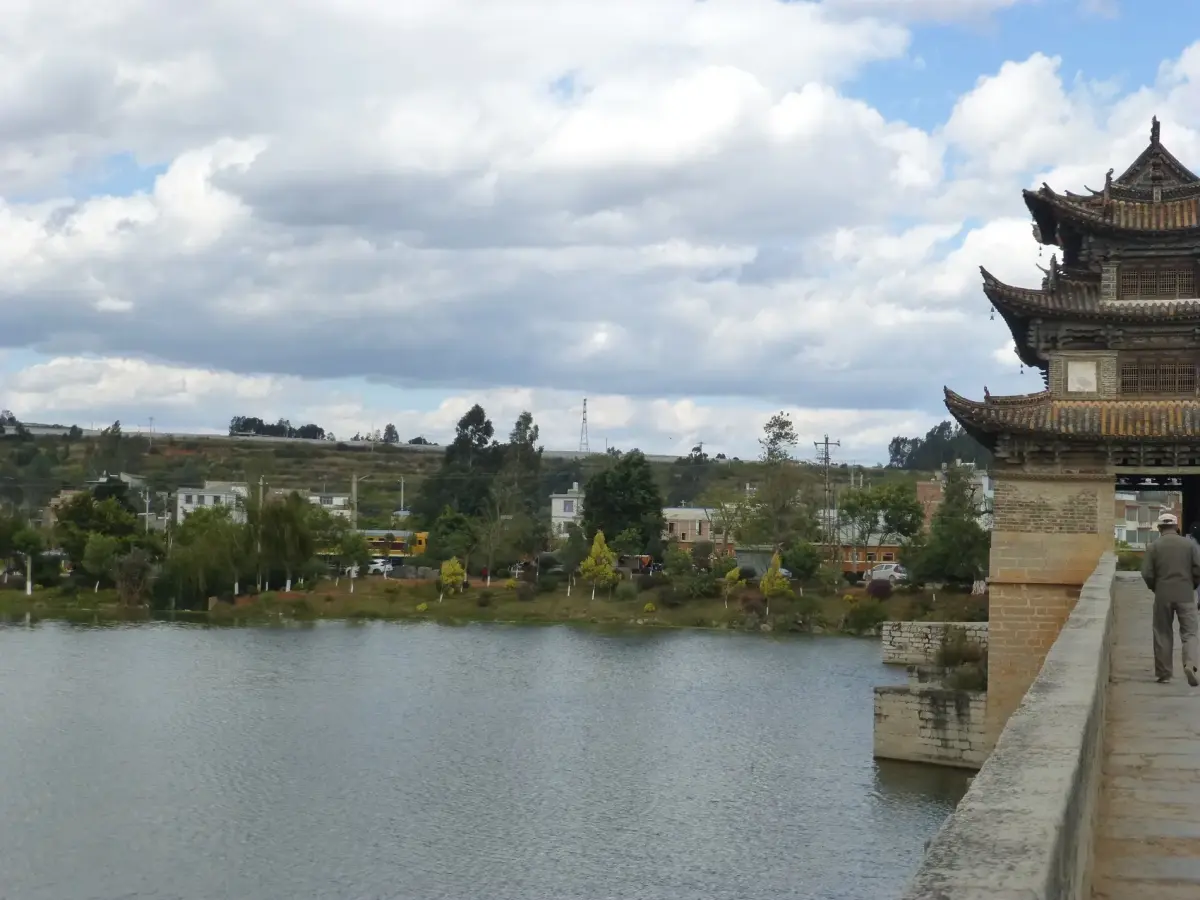
Located outside the historic center, the bridge was built during the Qing Dynasty at the point where two rivers meet. Its name comes directly from that setting. The bridge’s appeal lies not in its size but in its proportions. Seventeen stone arches, elegant pavilions, and their reflections in the water create one of Yunnan’s most recognizable historic landscapes.
The best time to visit is early morning or late afternoon. Under the harsh light of midday, it remains an impressive structure. In softer light, it becomes part of the landscape itself.
This is one of the few places around Jianshui where it is worth staying longer than necessary for a photograph, simply to watch the changing light and appreciate the quietness of the surrounding countryside.
08The Narrow-Gauge Railway
Many of China’s historic railways disappeared during the era of high-speed trains. In Jianshui, part of an old narrow-gauge line survived and was transformed into a heritage railway.
The train moves slowly, which is precisely why the journey works. It allows travelers to see the countryside at a pace impossible from a car. Fields, villages, old stations, and stretches of rural Yunnan pass by the windows.
The route connects several historic sites, including Double Dragon Bridge and Tuanshan Village. Even travelers who normally avoid tourist attractions often find the railway enjoyable because it feels less like entertainment and more like a continuation of the journey.
It offers a broader view of the landscape surrounding Jianshui beyond the walls of the old town.
09Tuanshan Village
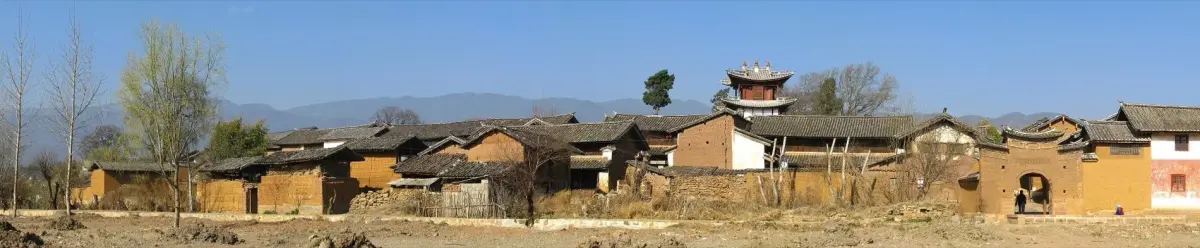
Around thirteen kilometers from Jianshui lies Tuanshan Village, one of Yunnan’s best-preserved historic settlements.
If the Zhu Family Garden illustrates the life of a wealthy urban family, Tuanshan reveals the architecture of a traditional Yunnan village. Historic homes, stone paths, inner courtyards, and merchant residences have survived here remarkably well.
What makes Tuanshan memorable is its authenticity. It does not feel like an open-air museum. It feels like a village. People still live here, and ordinary daily life continues among the historic buildings.
For that reason, a visit feels less like sightseeing and more like encountering another layer of the region’s history. The village rewards those willing to slow down and spend several hours exploring without a strict itinerary.
10Jianshui Purple Pottery
Most historic towns in China are associated with a particular craft. In Jianshui, that craft is purple pottery.
Its history stretches back several centuries. Artisans combine local clays of different colors before firing, allowing patterns to become part of the object itself rather than something applied afterward.
As a result, even a simple teacup requires significant skill and labor. The old town is home to numerous workshops and pottery stores. Not every piece is equally interesting, so it is worth taking time to compare craftsmanship, finish, and design rather than buying the first item that catches your eye.
For travelers who prefer souvenirs with a genuine connection to a place, Jianshui purple pottery remains one of the town’s best purchases.
11How Long Should You Stay in Jianshui?
One night is enough to see the main sights of the old town.
Two nights allow time to visit Double Dragon Bridge while exploring the Confucius Temple and Zhu Family Garden at a more relaxed pace.
Three nights reveal the version of Jianshui that most people remember long after they leave. Not simply as a collection of historic sites, but as a living town where old wells, evening streets, tofu grills, family courtyards, and everyday life come together to create a lasting impression. That is why many travelers who arrive here as a stop between Kunming and the Yuanyang Rice Terraces later describe Jianshui as one of the most enjoyable places they visited in Yunnan.
12Is Jianshui Worth Visiting?
If your goal is to see China’s most famous landmarks, perhaps not.
But if you are interested in historic towns where architecture remains connected to everyday life, Jianshui deserves serious consideration.
There is no need to spend your time searching for the next attraction. Sometimes it is enough to walk through the streets, notice old wooden doors, listen to the sounds of the evening market, stop beside an ancient well, or sit down with a plate of freshly grilled tofu.
That is Jianshui’s greatest strength. Many people arrive expecting to remember a handful of famous sights. They leave remembering the town itself.