Weishan County sits south of Dali in western Yunnan, close enough to reach on a short trip, but different enough to feel like a change in atmosphere. Most travelers know Dali for Erhai Lake, cafés, guesthouses, and the familiar rhythm of a well-loved Yunnan destination. Weishan is smaller, older in feeling, and more local in texture. Its interest is not built around one spectacular monument. It comes from the way several layers of Yunnan meet here: the old Nanzhao story, Ming and Qing street plans, Taoist temples in forested mountains, Hui Muslim villages, Yi culture, and a food tradition strong enough that people in Dali still say, “Play in Dali, eat in Weishan.”
This is not a place to visit for a checklist day where every hour is forced into a schedule. Weishan rewards attention because the details are close to the ground: a wooden shopfront darkened by time, a bowl of rice noodles eaten before the streets become warm, old men playing cards under deep eaves, the smell of fried dough and broth near a morning market, the sudden sight of Gongchen Tower rising above a low, tiled town. For travelers who like Yunnan but want something less polished than Dali Old Town, Weishan is one of the most interesting small destinations in the province.
011. Weishan Ancient Town
Weishan Ancient Town is the natural place to begin. The old town is known for its preserved grid-like street layout, with Gongchen Tower at the center and narrow lanes extending around it. Compared with more famous old towns in Yunnan, Weishan feels less aggressively commercial. There are shops, guesthouses, food stalls, and visitors, but daily life still gives the streets their structure. People are buying vegetables, carrying baskets, opening shutters, making breakfast, and moving through the town because they live here, not because the town exists only as a scenic backdrop.
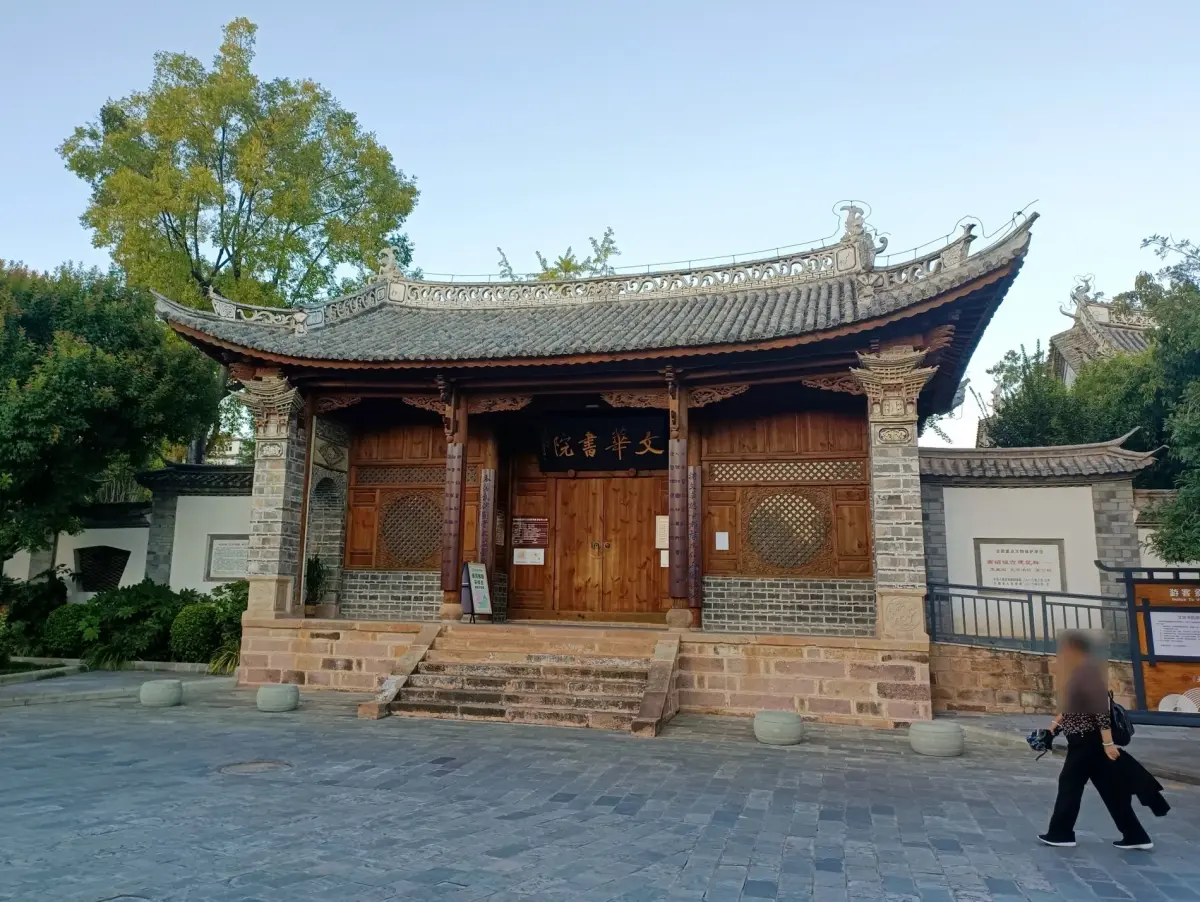
The architecture is restrained rather than theatrical: whitewashed walls, gray-tiled roofs, carved wooden doors, stone roads, and courtyard houses that still carry Ming and Qing influence. The pleasure of Weishan is not that every building is perfect; it is that the old town still feels coherent. The streets are low and walkable. The scale is human. Gongchen Tower gives the town a sense of orientation, but the side lanes are where the place becomes memorable.
Start early, before the day trips arrive. Walk around the tower, then let yourself move into the smaller streets where breakfast shops are already busy. Weishan’s beauty is not loud. It is in the way morning light sits on old timber, in the slight unevenness of the stone under your shoes, in the quiet concentration of a cook preparing one bowl after another without performance.
Practical Info: Weishan is roughly one hour to 1.5 hours from Dali by road, depending on where you start. Some recent traveler reports also note a high-speed rail connection between Dali and Weishan, making the county easier to reach than it once was. Plan at least one full day, though one night is much better if you want to see the town in the morning and evening.
022. Gongchen Tower
Gongchen Tower is the visual anchor of Weishan Ancient Town. It stands in the old city like a marker of civic memory, large enough to dominate the street but not so massive that it overwhelms the town around it. The structure gives Weishan its most recognizable silhouette: tiled rooflines, wooden beams, a raised gate-like form, and streets extending from it with a calm sense of order.
What makes Gongchen Tower special is not only the architecture, but the way life continues around it. People pass through on scooters, children cross the square, vendors prepare food nearby, and travelers stop to take photos before moving back into the lanes. It is not isolated behind a sterile tourist barrier. It still belongs to the rhythm of the town.
Come twice if you can: once in the morning, when the streets feel practical and awake, and once after dark, when the tower is lit and the old town becomes softer. The evening scene is especially pleasant because Weishan does not have the same heavy nightlife machinery as bigger tourist towns. There is movement, food, conversation, and light, but not the feeling that the town is trying too hard to entertain you.
Practical Info: Gongchen Tower is central and easy to reach on foot from most places inside the ancient town. It is best experienced as part of a walk rather than as a separate attraction.
033. Weibao Mountain
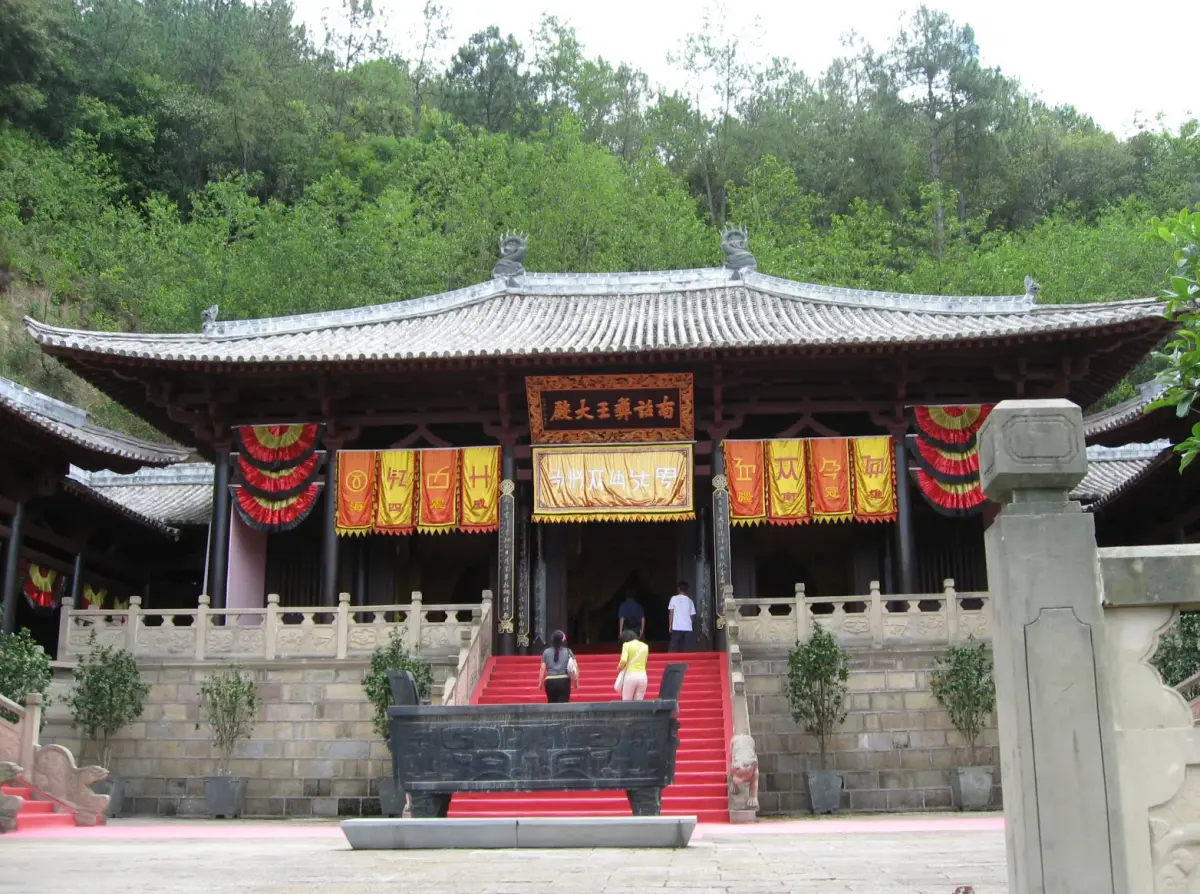
Weibao Mountain is the other essential reason to come to Weishan. Located southeast of the county town, it is one of Yunnan’s important Taoist mountains and is closely connected with Nanzhao history and local religious culture. The mountain is forested, quiet, and dotted with temples, halls, gates, and courtyards. The experience is part hike, part pilgrimage route, part architectural walk through old religious spaces.
The temples are not arranged as one single monument. They appear gradually as you move through the trees. Stone steps lead upward, courtyards open unexpectedly, incense hangs in the air, and painted beams sit under tiled roofs against a background of forest. The mountain has a very different mood from the old town below. Weishan Ancient Town is about streets, food, and human scale; Weibao Mountain is about shade, height, ritual space, and the slow unfolding of a sacred landscape.
You do not need to be a specialist in Taoism to appreciate it. What matters is the atmosphere: the way old buildings sit in the mountain rather than on top of it, the way the forest muffles sound, the way each temple feels like a pause in the climb. For travelers tired of crowded scenic areas, Weibao Mountain can feel unusually generous. It asks for time and decent shoes, but it gives back a sense of spaciousness.
Practical Info: Weibao Mountain is about 10 kilometers from Weishan Ancient Town. Some sources mention taxis or local minibuses from Weishan, and recent travel reports describe local bus options as well. Allow half a day if you want a relaxed visit. Wear comfortable shoes, bring water, and take a light layer because mountain weather can feel cooler than the town.
044. The Nanzhao Connection
Weishan’s historical importance comes from its connection with Nanzhao, the powerful kingdom that shaped much of southwestern China’s history during the Tang period. The area around present-day Weishan is often described as the birthplace or early base of Nanzhao culture. For many travelers, Dali is the more familiar name because it later became the capital of the Dali Kingdom and developed into one of Yunnan’s major travel destinations. Weishan feels quieter today, but historically it is not secondary. It is part of the deeper foundation of the region.
This history gives the county a different weight. The old streets are not simply “pretty old China.” The area sits within a long story of frontier kingdoms, mountain peoples, trade routes, religious exchange, and cultural layering between Yi, Bai, Hui, Han, and other communities. You do not need to turn the visit into a history lesson, but knowing this background changes how you see the place. The old town becomes more than a preserved street grid. Weibao Mountain becomes more than a temple hike. Donglianhua becomes more than a photogenic village.
Weishan is interesting because its history has not been flattened into one clean tourist narrative. It is layered, sometimes complex, and still visible in ordinary forms: food, temple routes, courtyard homes, mosques, street names, festivals, and the way different communities have shaped the county over time.
Practical Info: Read a little about Nanzhao before arriving. Even a basic understanding will make Weishan feel richer, especially if you are also visiting Dali, Shaxi, or other parts of western Yunnan.
055. Donglianhua Village
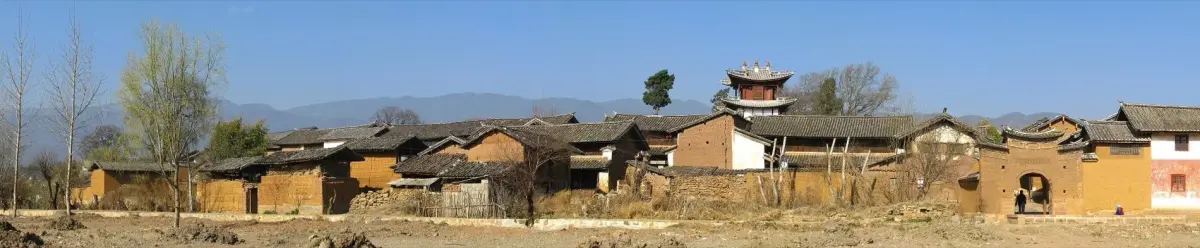
Donglianhua Village, often translated as East Lotus Village, is one of the most distinctive side trips from Weishan. It is a Hui Muslim village known for its traditional culture, mosque, and old courtyard residences connected with merchant families and caravan trade. The village adds another layer to the Weishan story because it shows how Yunnan was shaped not only by kingdoms and temples, but also by trade, migration, religion, and domestic architecture.
The most interesting buildings here are not showy in a modern sense. Their beauty comes from proportion, woodwork, courtyards, and the feeling of a family compound built with money earned through long-distance trade. Donglianhua’s history is closely tied to Muslim communities in Yunnan and to the old movement of goods through the region. For travelers interested in the Tea Horse Road and Yunnan’s cultural diversity, this village is worth serious attention.
Visit respectfully. This is not an abandoned museum village or a theme park; it is a real community with religious and domestic spaces. Dress modestly, ask before photographing people closely, and move through the village with the quietness you would want from visitors in your own neighborhood.
Practical Info: Donglianhua is north of Weishan Ancient Town and can be visited as a side trip by car or arranged transport. It pairs well with Weishan Ancient Town in the same day, while Weibao Mountain deserves its own half-day.
This is not a place to visit for a checklist day where every hour is forced into a schedule. Weishan rewards attention because the details are close to the ground: a wooden shopfront darkened by time, a bowl of rice noodles eaten before the streets become warm, old men playing cards under deep eaves, the smell of fried dough and broth near a morning market, the sudden sight of Gongchen Tower rising above a low, tiled town. For travelers who like Yunnan but want something less polished than Dali Old Town, Weishan is one of the most interesting small destinations in the province.
066. Weishan Food
Food may be the most immediate reason to stay longer in Weishan. The county has a strong snack culture, and its annual snack festival has become one of the best-known food events in the Dali area. But you do not need to arrive during the festival to eat well. Weishan’s everyday food is already one of its main attractions.
The dish most closely associated with the county is often called “one-strand noodles” or Yi Gen Mian. The name refers to a long, continuous noodle, and part of its appeal is the craft involved in making it. It is not just a visual trick. A good bowl depends on texture, broth, timing, and the way the noodle holds together while still eating cleanly. It is the kind of food that makes sense in a town where culinary skill is treated as ordinary knowledge rather than spectacle.
Another important local breakfast is pa rou er si, usually described as rice noodles or rice-cake strands with soft braised pork. The pleasure of the dish is direct: tender meat, warm broth, chewy rice texture, and the comfort of eating it early in the day while the town is still waking up. Yunnan erkuai and ersi are made from rice, giving them a different texture from wheat noodles. They can be sliced, shredded, stir-fried, or served in broth, and Weishan is a good place to understand how varied this rice-based food tradition can be.
You will also find bean jelly, green bean cake, preserved fruits, pickles, fried dough, and small street snacks that are better eaten in modest quantities across the day. This is the right town for grazing: breakfast noodles, tea, a small sweet, a savory snack, then another bowl later when you realize you are still thinking about the first one.
Practical Info: Eat breakfast early. The best food experiences in Weishan are often simple morning meals, not formal dinners. Bring cash, order what locals are eating, and try several small dishes rather than one heavy meal.
077. The Weishan Snack Festival
The Weishan Snack Festival usually takes place in spring and brings the county’s food culture into the open. Recent reports describe the 2026 festival running in late March, with snack markets, cultural performances, intangible heritage experiences, and events in and around Weishan Ancient Town. For food-focused travelers, this is one of the most interesting times to visit, though it will also be busier than usual.
The festival matters because it makes visible something that already exists year-round: Weishan’s confidence as a food town. Many destinations invent food events as a marketing layer. Weishan’s snack culture feels more rooted because the everyday eating is already strong. The festival simply gathers it into a more public form.
That said, the best way to enjoy it is not to treat it like a competition to eat everything. Choose carefully. Watch what draws a local queue. Look for dishes being made continuously rather than sitting under heat lamps. Share portions if you are traveling with someone, and leave room for repeat bowls of whatever genuinely moves you.
Practical Info: If you want to attend the Snack Festival, check the exact dates before planning because festival timing can shift by year. Book accommodation early if staying in Weishan during the event.
088. Markets, Tea, and Small Purchases
Weishan is a good town for small, useful purchases rather than souvenir hunting. Local products often include tea, walnuts, preserved fruits, pickles, beans, herbs, and tie-dyed cloth. The appeal is not in finding a polished boutique object, but in seeing how agricultural products and household foods move through the town.
Morning markets are especially valuable because they reveal the county better than any scenic signboard. You see what people cook with, what they buy daily, what smells define the street, and how local food culture begins before it becomes a finished bowl. For a traveler who cares about food, this is where Weishan becomes legible.
Take your time in teahouses too. Yunnan is a tea province, and even a simple cup in an old-town setting can become one of the day’s best pauses. The point is not ceremony. It is the combination of shade, wooden furniture, street sound, and the soft bitterness of tea after a salty breakfast.
Practical Info: Go to markets early in the morning. For food products, check packaging and transport rules if you plan to carry them across borders later in your trip.
099. How Long to Stay
Weishan can technically be visited as a day trip from Dali, but that is the least interesting version of the county. A day trip gives you the old town, a meal, and perhaps a quick impression of Weibao Mountain or Donglianhua if you move fast. One night is much better. It lets you walk the ancient town in the evening, eat breakfast properly, and visit either the mountain or the village without turning the day into logistics.
The ideal first visit is two days and one night. Spend the first afternoon in Weishan Ancient Town, stay overnight, eat breakfast early, then choose Weibao Mountain or Donglianhua for the second day. With two nights, you can do all three calmly: old town, mountain, village, food, markets, and unplanned wandering.
Practical Info: Stay inside or near the ancient town if possible. Weishan is not large, and the pleasure of being here comes from stepping directly into the streets in the morning and evening.
1010. Who Will Love Weishan
Weishan is best for travelers who enjoy old towns with real daily life, regional food, layered history, modest architecture, and cultural detail. It is not the right place for someone who needs a full menu of international restaurants, nightlife, luxury hotels, or highly curated attractions. Dali is better for that. Weishan is quieter, more local, and more dependent on your attention.
It is especially rewarding if you are already traveling through western Yunnan. After Dali, Weishan shows another side of the region: less lake scenery, fewer cafés, more food craft, more old-town texture, and a stronger feeling of county life. It also pairs well with interests in Nanzhao history, Taoist temple landscapes, Hui Muslim communities, Yi culture, and Yunnan’s rice-based cuisine.
The county’s charm is not fragile, but it is subtle. Come for the old town, stay for breakfast, make time for Weibao Mountain, and leave with the feeling that you have seen a part of Yunnan that still belongs mostly to itself.
11Suggested 2-Day Itinerary
Day one should be simple. Arrive from Dali before lunch, check in near the ancient town, and spend the afternoon walking around Gongchen Tower and the old lanes. Stop for tea, try small snacks, and return to the center after dark to see the tower lit. Keep dinner informal and local.
Day two begins with breakfast. Order pa rou er si or another rice-noodle dish, then go to Weibao Mountain for a half-day temple walk. Return to town in the afternoon for one more slow wander before leaving, or stay a second night and visit Donglianhua Village the next morning.
This is enough time to understand why Weishan is not just a side note to Dali. It has its own temperature, its own food memory, and its own historical gravity. In a province full of famous places, Weishan remains compelling because it does not need to announce itself loudly. It simply gives you good streets, good bowls, old stories, and a mountain where temples wait in the trees.